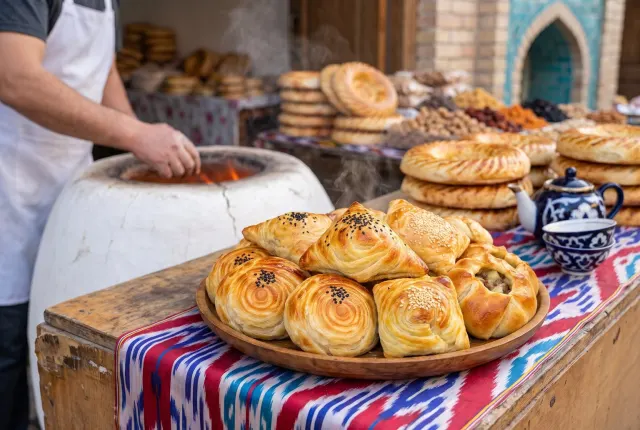
Tetouan has its own classic pastries, from gazelle horns to ghriba. At Samarkand Bakery we offer something different: six sweets from Turkey and Uzbekistan, homemade and prepared to order for the weekend. Four cakes, a jam and a drink, each with its origin, its taste, what goes best with it and how to keep it.
Tetouan, a city of sweets
Tetouan has a long sweet tradition. The city was rebuilt at the end of the 15th century by families from Granada, and their Andalusian heritage still shows in local cooking and pastry today. During Ramadan and at celebrations, tables fill up with chebakia, honey briouats and gazelle horns. It is a city that knows a good pastry when it sees one, which is exactly why we wanted to offer something different rather than a weaker version of the same thing.
Turkish and Uzbek sweets share a lot with Moroccan tradition: honey, nuts, syrups, tea. They just put them together differently.
1. Uzbek honey cake
Medovik was born in 19th-century Russian baking, at least according to the most common story, and went on to become a classic across Central Asia. In Uzbekistan it has its place on the tea table, on holidays and ordinary days alike.
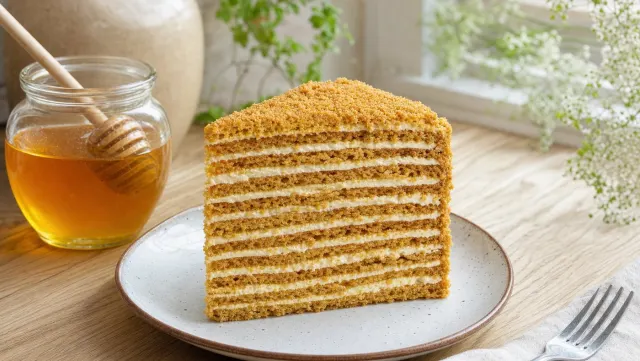
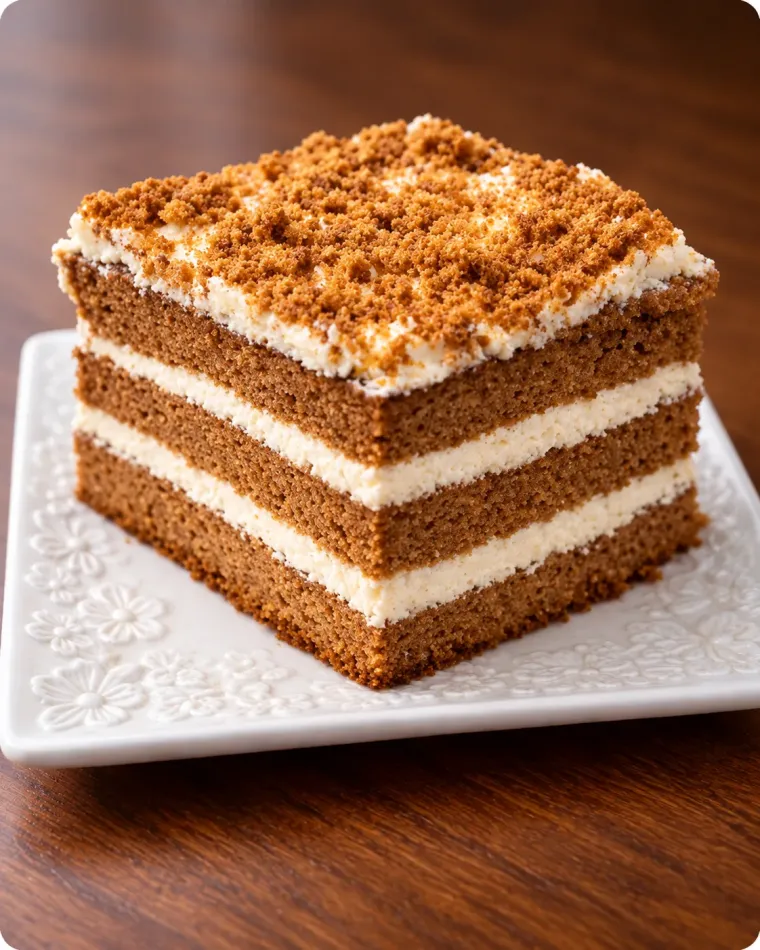
Our Uzbek honey cake is made from a honey cake batter baked into three thicker layers, softer and more cake-like than the thin rolled sheets of the Russian classic, and filled with a condensed milk butter cream. It rests before it is cut so the cream softens the layers. It tastes of caramel and melts in the mouth. It is sold by the slice, about 7 cm by 7 cm.
2. Sambali, Turkish semolina cake
If you like basbousa, Sambali will feel familiar. It is a Turkish semolina cake baked until golden and then soaked in a syrup that runs through the whole crumb. Ours has coconut and yoghurt in it and is topped with cream and crushed pistachios.
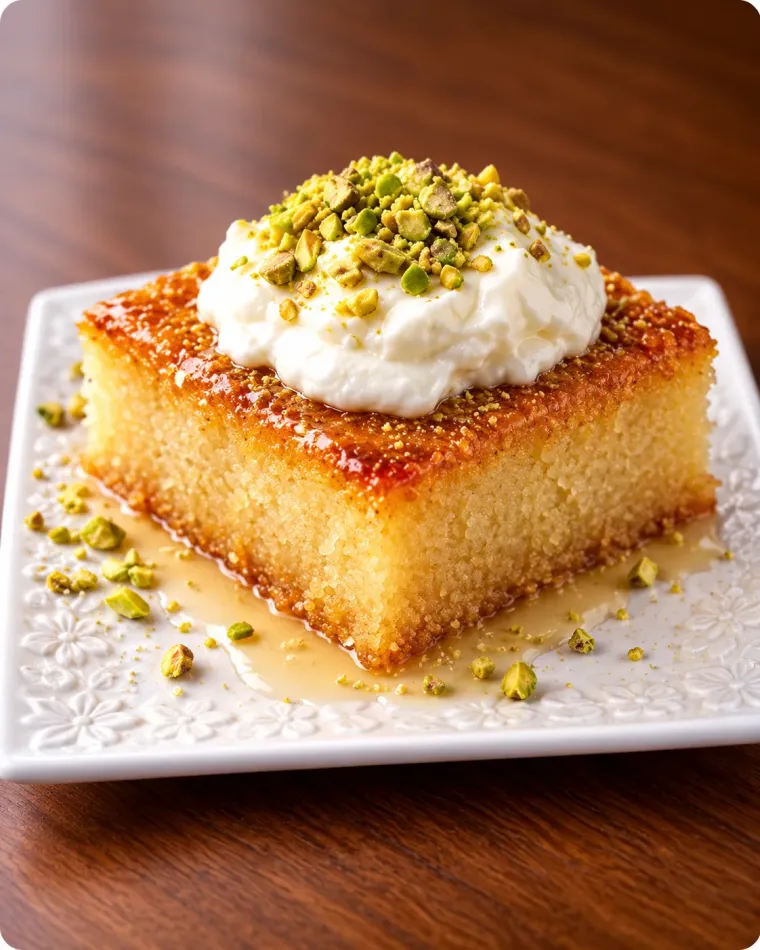
It is moist, with the slight grain of the semolina. Because of the syrup it is the sweetest of the four cakes, and a glass of unsweetened black tea balances it perfectly.
3. Lotus Biscoff Trileçe
Trileçe has travelled a long way. It started in Latin America as tres leches, the three-milk cake, then passed through the Balkans, Albania in particular, before becoming a classic of Turkish pastry shops.
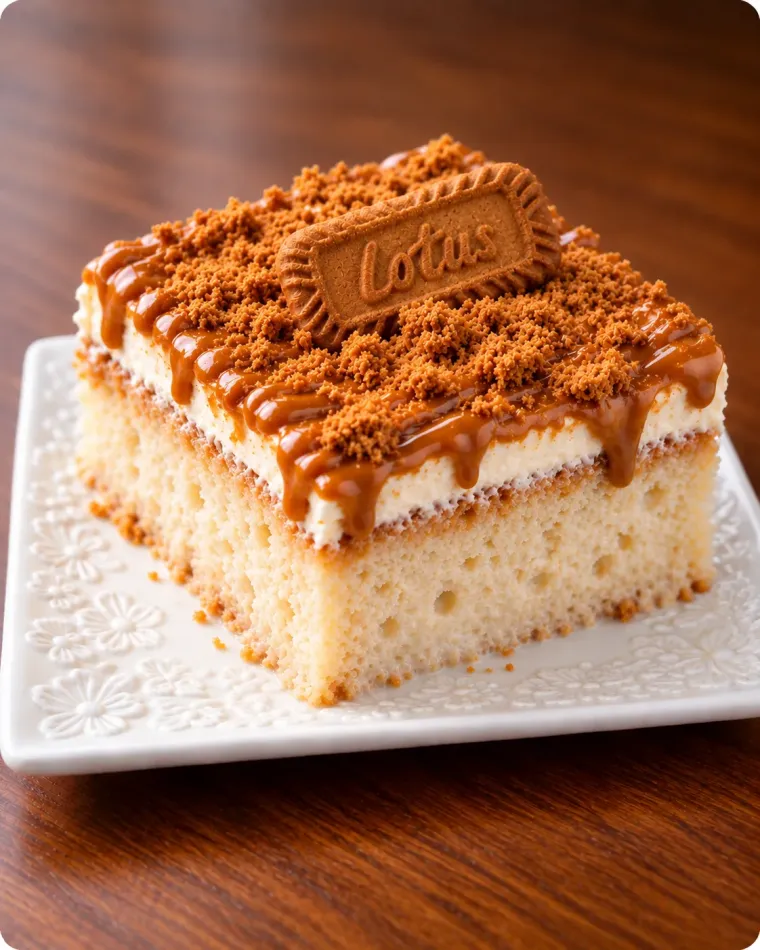
Our Trileçe is an airy sponge soaked in sweetened condensed milk, evaporated milk and whole milk, topped with whipped cream and Lotus Biscoff. It is the freshest and softest of the four, and it stays in the fridge until you serve it.
4. Turkish tiramisu
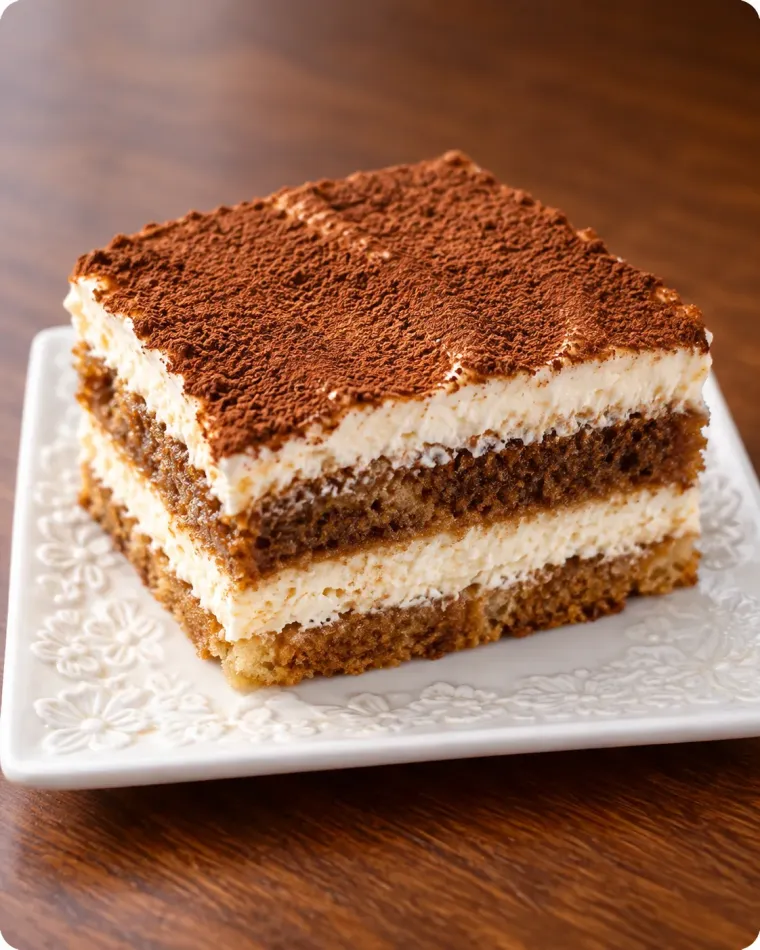
In Turkey, tiramisu is on every café menu, often as a layered cake. Our Turkish tiramisu starts from the same sponge as the Trileçe, soaked in coffee, layered with egg custard and cream, and topped with cocoa. There is no alcohol in it, just coffee. The slices are generous, around 200 g.
5. Walnut and fig jam
Figs are well known in northern Morocco. In Turkey, dried figs are a point of pride too, and they are often paired with walnuts. Our walnut and fig jam is made from dried figs simmered with just a touch of sugar, then mixed with crushed walnuts. It comes in a small 60 g pot.
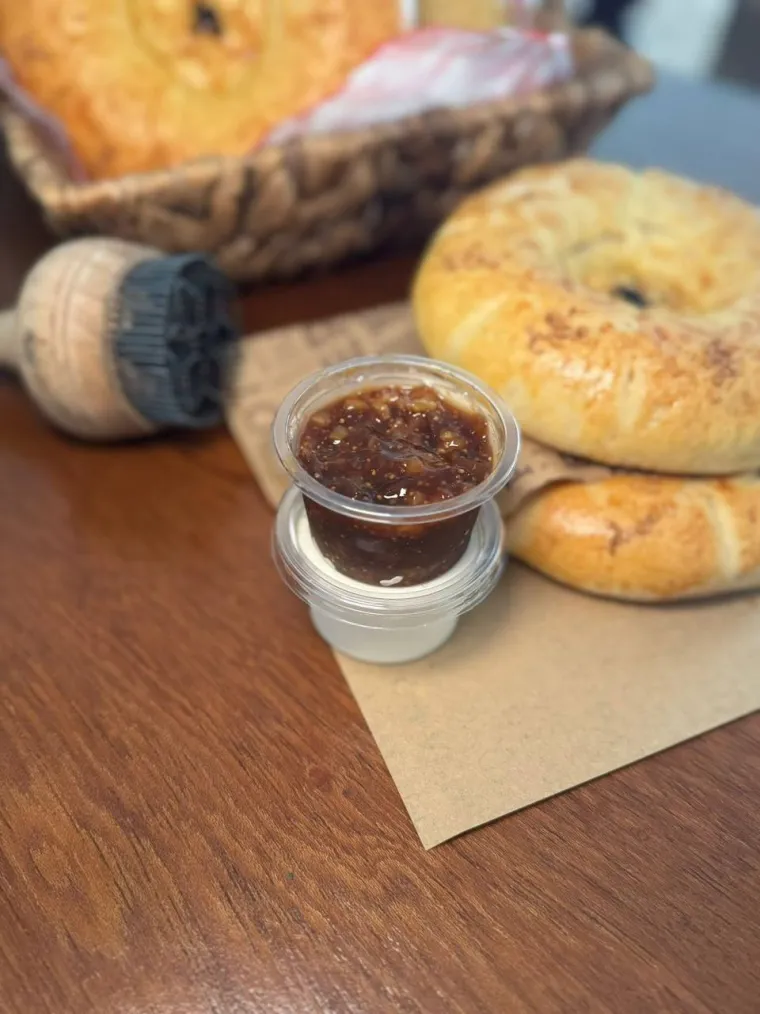
Spread it on bread, have it with a cheese pogaça or a spoon of labneh, and you have a Turkish breakfast in a few minutes. It is also very good with fresh cheese at the end of a meal.
6. Turkish spiced fruit sherbet
In the Ottoman Empire, şerbet was a drink of fruit, flowers or spices served at meals and celebrations. Don't confuse it with Moroccan charbat, which usually means a fruit and milk drink: Turkish sherbet is water-based, more like a diluted fruit syrup.
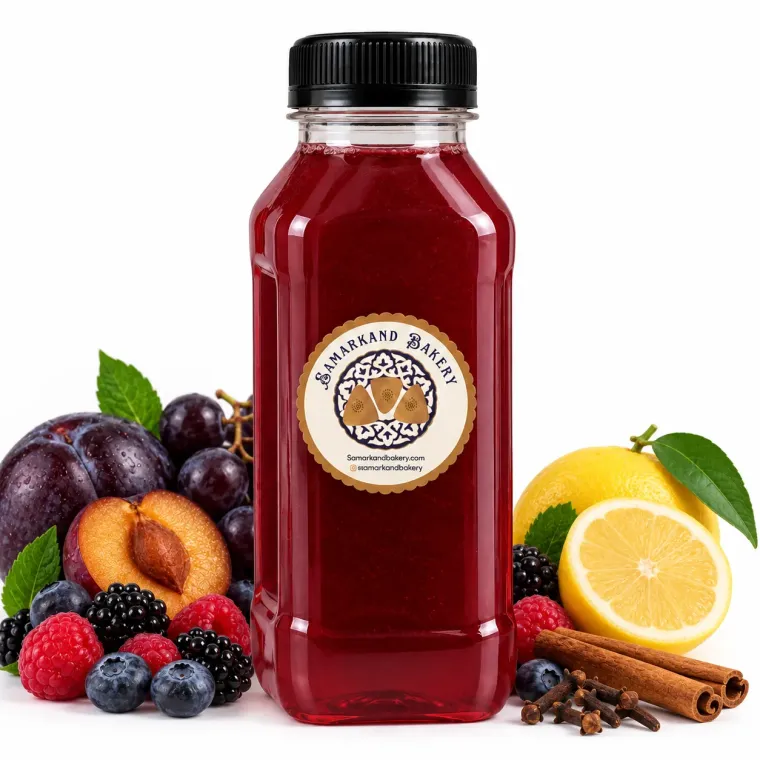
Our Turkish sherbet is made with mixed berries, plums and dark grapes, infused with cinnamon, cloves and lemon. It is best served well chilled, and you choose whether it is sweetened with sugar or with honey, for a little extra.
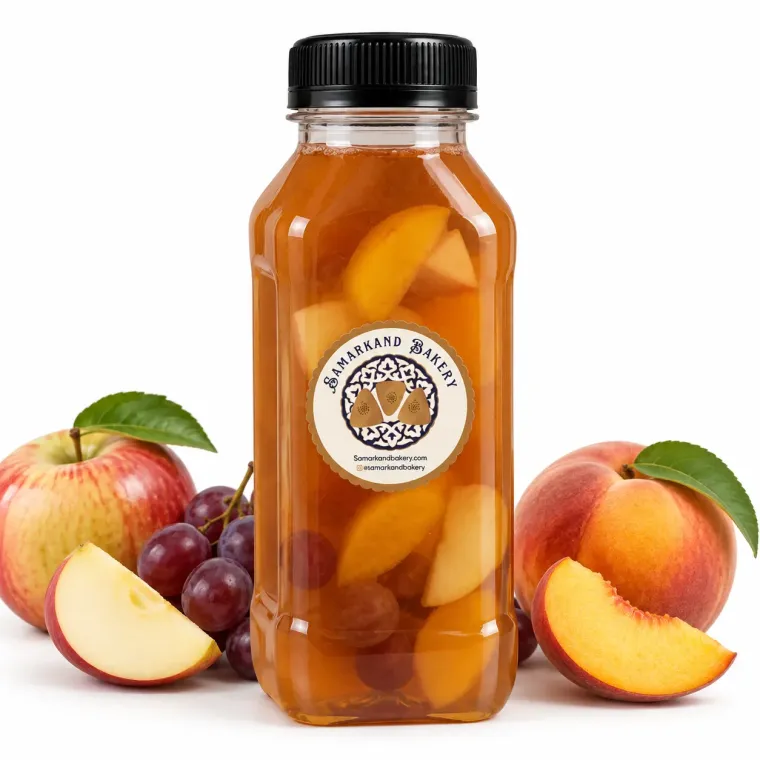
If you prefer something milder, our Uzbek kompot, made with apples, grapes and peaches, can be served hot or cold.
How to choose
- You love caramel and layer cakes: the Uzbek honey cake.
- You love fresh, creamy desserts: the Trileçe.
- You don't start the day without coffee: the Turkish tiramisu.
- You are a basbousa fan: the Sambali.
- You want something for breakfast: the fig and walnut jam.
- You want a drink that isn't juice: the sherbet or the kompot.
Which drink with which sweet?
- Honey cake: black tea, or a lightly sweetened mint tea.
- Sambali: unsweetened black tea, to balance the syrup.
- Trileçe: a coffee, or the sherbet well chilled.
- Turkish tiramisu: a Turkish coffee, simple as that.
- Fig and walnut jam: with warm bread and a glass of tea at breakfast.
Which occasion?
- Visiting family or friends: a box of mixed slices, so everyone gets to try something new.
- Ftour during Ramadan: a slice of Sambali sits happily next to the chebakia, and the sherbet makes a nice change from juice.
- Weekend breakfast: fig and walnut jam with pogaça or warm bread.
- A birthday: a platter of all four cakes, with a candle in the middle.
- An afternoon with friends: Turkish tiramisu and honey cake, with a coffee or tea.
Storing them
| Sweet | Where to keep it | When to eat it |
|---|---|---|
| Honey cake | Fridge | Same day or the next |
| Sambali | Fridge | Same day or the next |
| Trileçe | Fridge, until the last moment | Same day or the next |
| Turkish tiramisu | Fridge | Same day or the next |
| Sherbet and kompot | Fridge | Shake well before serving |
Take the cakes out ten to fifteen minutes before serving so the cream softens again.
Allergens
All four cakes contain gluten, eggs and dairy, and the Trileçe also contains soya (from the Lotus Biscoff). The Sambali and the fig and walnut jam contain tree nuts (pistachios and walnuts). The sherbet and the kompot contain none of the major allergens. Our kitchen also handles sesame, so traces are possible. Full details are on each product page.
Where to find them in Tetouan
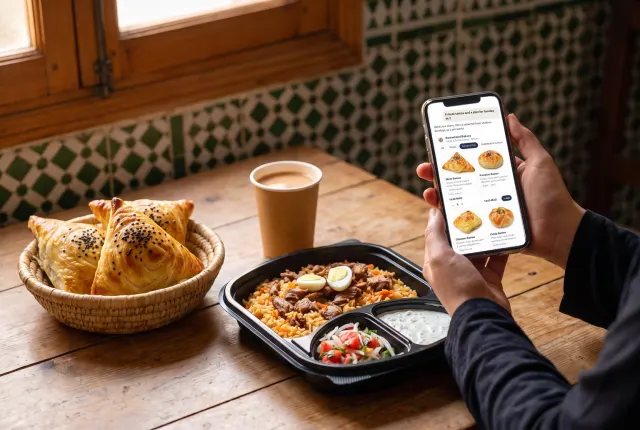
We are a home-based bakery with no shop front. Everything is ordered online, any time, and collected on Saturday or Sunday at Wilaya Centre in Tetouan, between 10:00 and 18:30, at a time you choose. Every order is made for you and never frozen. A box of mixed slices also makes a lovely gift when you are invited to someone's home.
Frequently asked questions
Are these pastries homemade?
Yes. Everything is made in our kitchen in Tetouan when you order it.
Can I try several cakes at once?
Yes, the cakes are sold by the slice. Taking one of each is the best way to find your favourite.
Which sweet is the least sugary?
The Turkish tiramisu, thanks to the bitterness of the coffee and cocoa. The Sambali, soaked in syrup, is the sweetest.
Do you make Moroccan pastries too?
No. Tetouan already has excellent Moroccan pastry shops, so we focus on what we know best: Turkish and Uzbek recipes that are hard to find here.
Where does the name Samarkand come from?
From Samarkand, one of the oldest cities in Uzbekistan and a famous stop on the Silk Road. It is a nod to Uzbek cooking, which sits at the heart of our menu alongside Turkish food.
Where can I buy Turkish pastries in Tetouan?
On our website, with weekend collection at Wilaya Centre.