Our bakery in Tetouan works to order only: you choose your bread on the website, we bake it for the weekend, and you collect it on Saturday or Sunday at Wilaya Centre. We do it this way so that every loaf is fresh when you pick it up, baked in small batches, with nothing thrown away at the end of the day.
Here is how it works, the breads we make and what sets each one apart, and how to keep them fresh at home.
A home bakery, not a shop
Samarkand Bakery is an Uzbek and Turkish bakery run from home in Tetouan. There is no shop window or counter with bread waiting on it, and no seating. Everything goes through the website: you order, we bake, you collect.
You won't find baguettes or round khobz with us either. We mostly make Uzbek and Turkish breads that you rarely see here, plus a few savoury and sweet pastries to go with them.
Why everything is made to order
Freshness. Bread baked "just in case" can sit on a shelf for hours. Ours is baked for a specific order, with the day you collect it in mind.
Small batches. A home oven only takes a few loaves at a time. Knowing in advance what has been ordered lets us plan each bake and give every dough the rising time it needs.
Nothing wasted. A conventional bakery has to guess what it will sell, and the leftovers often end up as breadcrumbs or in the bin. Baking only what has been ordered means we don't have that problem.
An old Moroccan habit
There is nothing new about this here. In the medinas, in Tetouan as elsewhere, families long kneaded their bread at home and sent it to the neighbourhood oven, the ferran, where the baker knew which house each board belonged to. You baked what the family needed for the day and no more. The way we work is quite close to that: the dough is made for you, and it never sits on a shelf.
Uzbek bread, with its stamped centre
In Uzbekistan bread is called non, and it sits at the centre of every meal (we tell its story in Samarkand, the city behind our name). It is never placed upside down, it is torn by hand rather than cut, and people avoid throwing it away. An old Uzbek custom is that, someone leaving on a journey takes a bite of non, and the rest waits for them until they come home insha Allah.
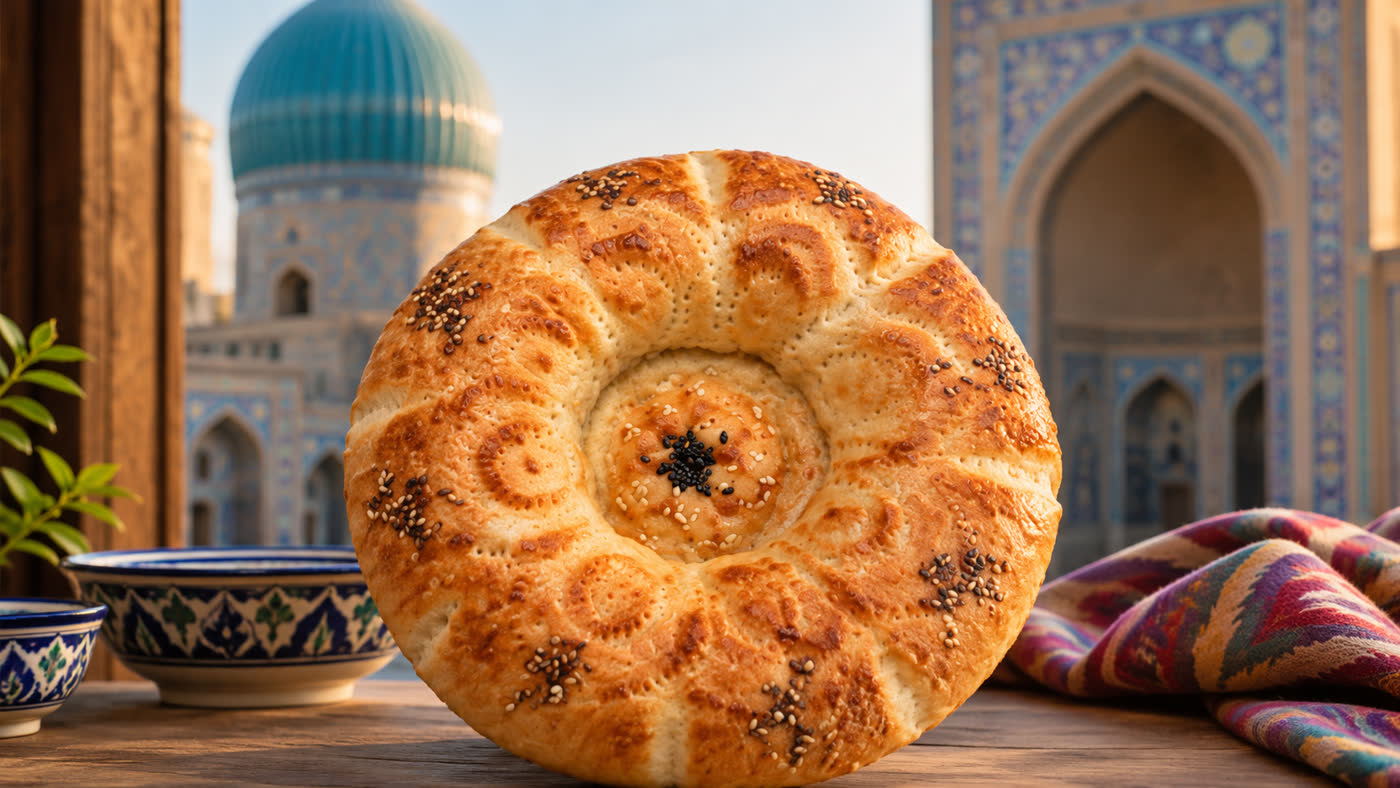
Our Uzbek bread (10 MAD) is made with flour, milk, butter, egg and a little yeast. The centre is marked with a bread stamp, the chekich, whose small pins press a pattern into the dough and stop the middle from rising. You get a thick, soft rim around a thinner, slightly crisp centre scattered with seeds.
In Uzbekistan, non is traditionally baked on the walls of a clay oven called a tandir. Of course we can't do that yet (please make dua for us to do so in the future insha Allah). Our breads are baked in an ordinary home oven: we keep the shape, the stamp and the recipe, but unfortunately, not the tandir.
Flower bread, made for sharing
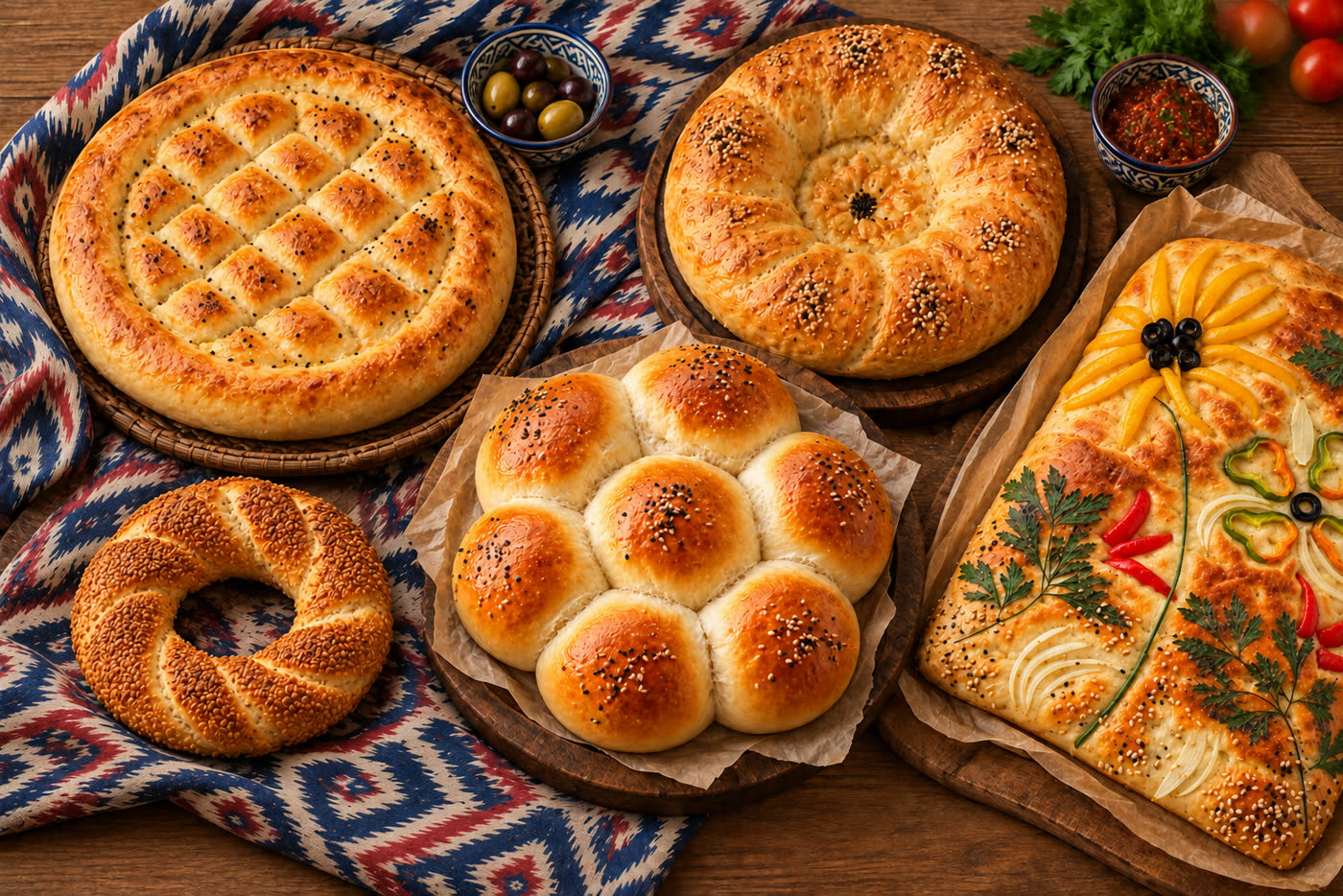
Flower bread (10 MAD) is seven soft rolls baked together in the shape of a flower and sprinkled with sesame and nigella seeds. The dough is made with milk, butter and egg, which gives it a very tender, almost brioche-like crumb. You put it whole in the middle of the table and everyone pulls off their own roll. For a family breakfast with butter, cheese or jam, it is the easiest choice.
Turkish bread, round and soft
Our Turkish bread (10 MAD) is a round loaf made with milk, yoghurt and egg, topped with sesame and nigella seeds. The yoghurt gives it a soft, airy crumb that dries out more slowly than bread made from just flour and water. It is the all-rounder on our menu: sliced with soup, next to grilled meat, or toasted with butter.
Za'atar bread, best eaten warm
Za'atar bread (10 MAD) is a yeasted bread topped with za'atar, toasted sesame and olive oil. Za'atar, a mix of dried herbs, sesame and sumac, is everywhere in the Levant, where people spread it on flatbreads in the morning. This bread is best warm, while the herbs are still fragrant, with white cheese, olives or eggs. The dough has no milk or egg in it.
Simit and our pogaça
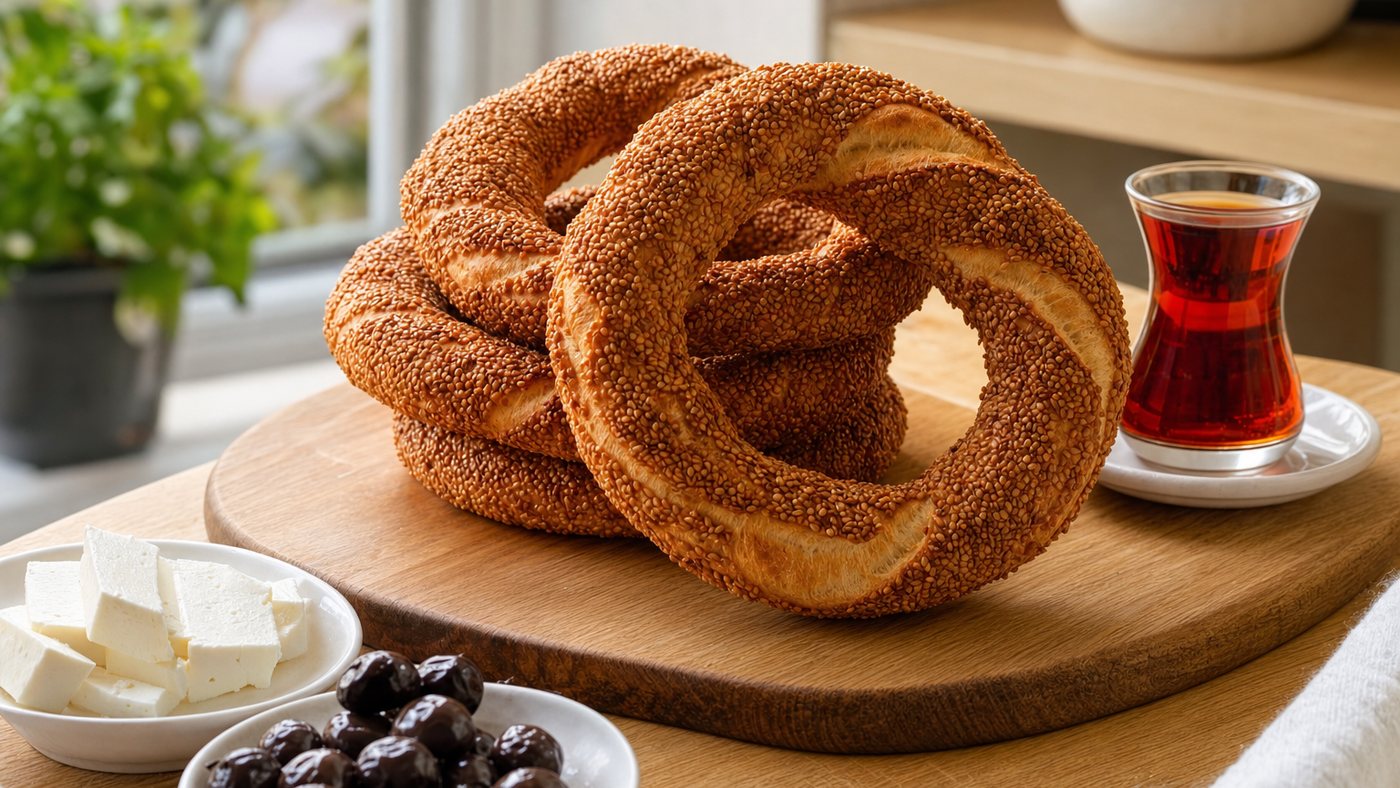
Simit (12 MAD) is the sesame ring of the Istanbul streets: two ropes of dough twisted together, dipped in pomegranate molasses and rolled in sesame. Crunchy outside and dense inside, it is best eaten on the day.
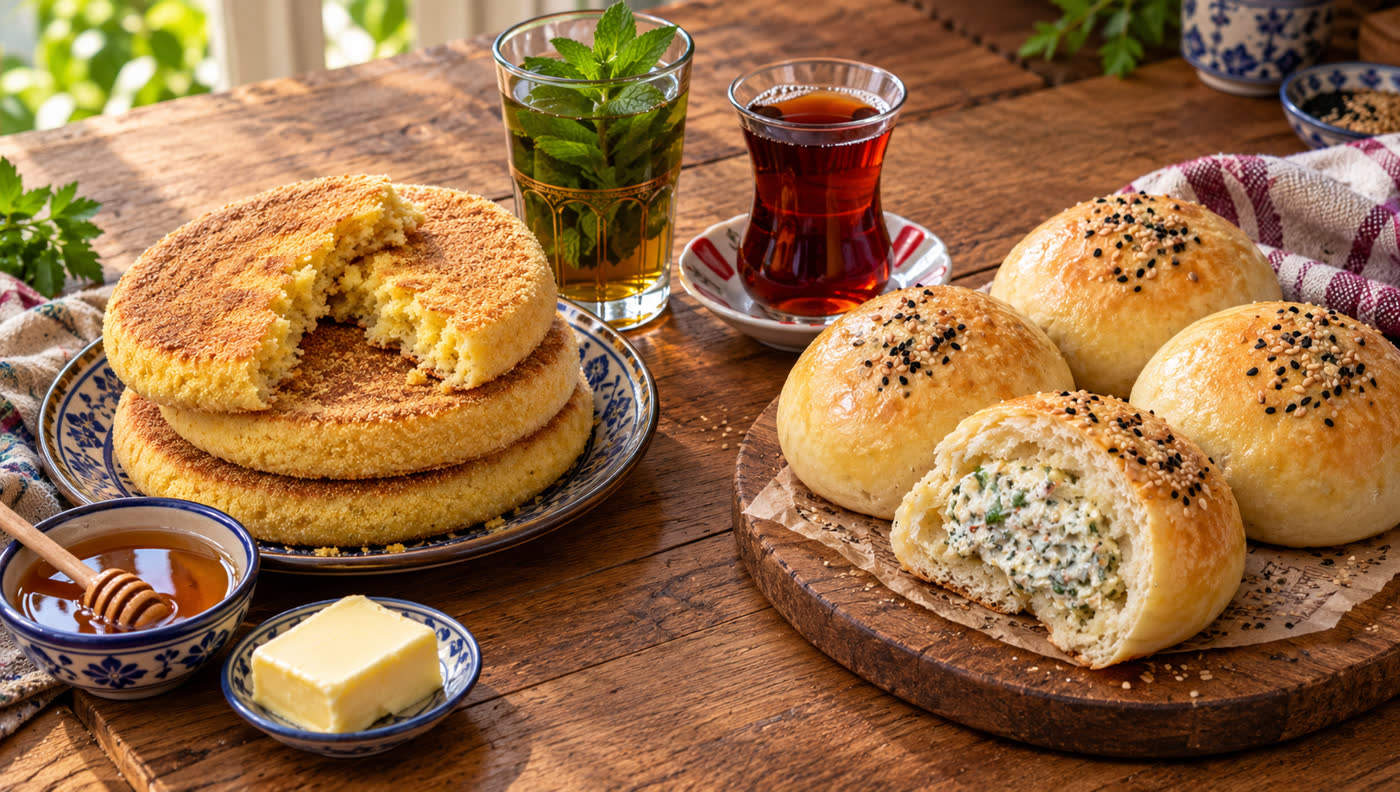
Pogaça are soft Turkish rolls, often filled (here is how they differ from Moroccan harcha). We make four:
- Cheese pogaça (10 MAD): mozzarella, labneh, garlic, spring onion and herbs.
- Black olive pogaça (6 MAD): the dough is rolled with a homemade black olive paste, then tied in a knot.
- Green olive pogaça (10 MAD): rolled up like a pinwheel with green olives and labneh.
- Veggie pogaça (10 MAD): carrot, courgette, potato, peppers and onion.
How to order, step by step
- On the website, in French, Arabic or English, add your bread to the basket, along with anything else you like: pastries, slices of cake, drinks.
- Choose your collection day, Saturday or Sunday, and a time between 10:00 and 18:30.
- Place the order as early as you can, since each bake is planned from the orders.
- Come to Wilaya Centre at the time you chose.
Keeping your bread fresh
Homemade bread keeps like homemade bread: lovely on the day, still good the next, and very happy in the freezer.
| Bread | At room temperature | In the freezer | To reheat |
|---|---|---|---|
| Uzbek bread | 2 days, in a tea towel | 1 month, cut into quarters | A few drops of water, 5 min at 180°C |
| Flower bread | 1 to 2 days, in a closed bag | 1 month, rolls separated | 4 to 5 min at 160°C |
| Turkish bread | 2 days, in a closed bag | 1 month, sliced | In the toaster, straight from frozen |
| Za'atar bread | On the day | 1 month, well wrapped | 4 min at 180°C, not in the microwave |
| Simit | On the day | 1 month | 4 to 5 min at 180°C, 8 min from frozen |
| Pogaça | 1 day, in the fridge if cheese-filled | 1 month | 6 to 8 min at 160°C |
Keep plain bread out of the fridge, as it goes stale faster there. And if you plan to freeze it, do it on the day you collect, not two days later.
Allergens
All our breads contain gluten (wheat). Uzbek bread, Turkish bread and flower bread also contain milk and eggs. Flower bread, za'atar bread and simit contain sesame, and Uzbek bread and Turkish bread may contain it. Full details are on each product page.
Frequently asked questions
Can I drop by and buy bread without ordering?
It is best to order first. We bake for the weekend's orders, so there is no bread waiting in a shop window.
Do you have bread during the week?
No, collection is on Saturday and Sunday, between 10:00 and 18:30. You can place an order on the website at any time, though.
Is your Uzbek bread baked in a tandir?
No, in an ordinary home oven. We keep the traditional shape and stamp.
Do you make gluten-free bread?
No, all our breads are made with wheat flour.
Do you deliver?
Not at the moment. All orders are collected from Wilaya Centre.
Where to find our bread in Tetouan
Order on our website as early as you can and choose a collection time on Saturday or Sunday, between 10:00 and 18:30, at Wilaya Centre. For a large quantity, for a party for example, message us on WhatsApp first from the contact page on the website.