There's something about the smell of freshly baked samsa that makes it almost impossible to walk past without stopping.
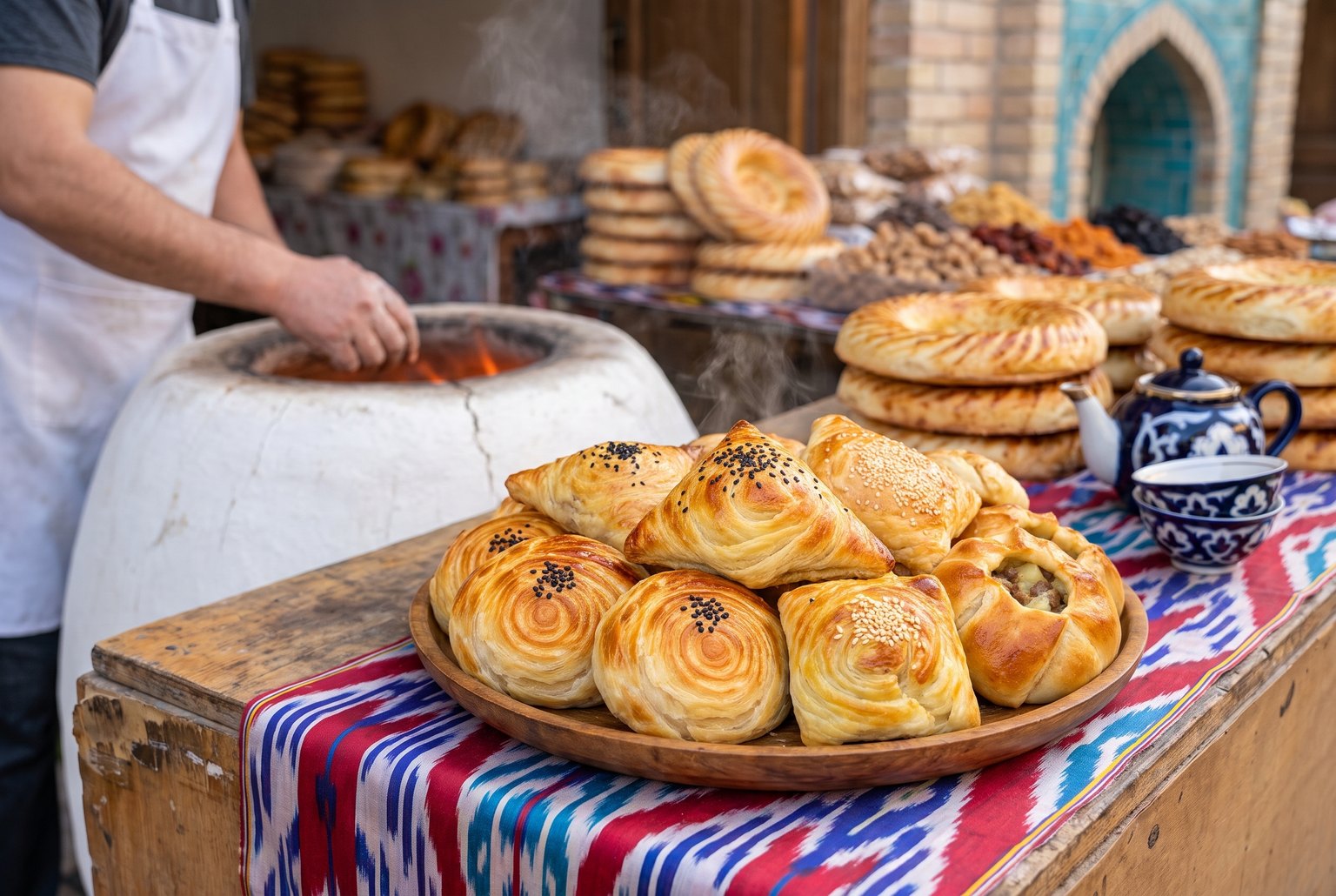
Imagine wandering through an old bazaar in Samarkand. There are stalls piled high with fruit, baskets of freshly baked bread, people chatting over tea, and somewhere nearby, a baker is pulling golden pastries from a hot clay oven.
You might not have planned to buy anything to eat. But then you catch that wonderful smell of warm pastry, meat and onions, and suddenly your plans change!
That's the magic of Uzbek samsa, or somsa, as it's commonly called in Uzbekistan.
For me, samsa is one of those foods that tells you so much about a country without needing a single word. It's simple, comforting, full of flavour, and closely connected to the everyday life and hospitality of Uzbekistan.
And now, here at our little home bakery in Tetouan, it's one of the traditional Uzbek foods we're especially happy to share with our Moroccan customers.
So, let me tell you a little about this lovely pastry, where it comes from, how it's made, and why it means so much to Uzbek people.
What Exactly Is Uzbek Samsa?
If you've never tried Uzbek samsa before, the easiest way to describe it is as a savoury pastry filled with meat, vegetables or other delicious ingredients, then baked until golden.
But that description doesn't quite do it justice!
The first thing you'll notice is the pastry. Depending on the variety, it can be wonderfully flaky, with delicate layers that break apart as you take a bite, or slightly softer and more bread-like.
Then there's the filling.
Traditional meat samsa is often made with lamb or beef and plenty of onions. And when I say plenty, I really mean it! The onions aren't just there for flavour. They help keep the filling juicy as it cooks.
Add a little salt, black pepper and sometimes cumin, and you have something surprisingly delicious from just a handful of ingredients.
Samsa also comes in different shapes. Some are triangular, others round or square, and there are even open varieties.
The shape often depends on the filling, the dough and the baker's own tradition.
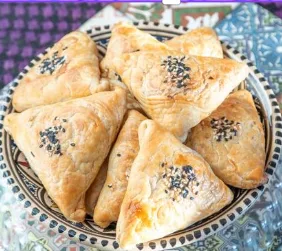
Our Uzbek Meat Samsa, for example, is a triangular pastry with a flaky, buttery exterior and a savoury beef-and-onion filling.
And I have to say, there's something particularly satisfying about biting into one while it's still warm!
Is Uzbek Samsa the Same as an Indian Samosa?
This is a question I can imagine quite a few people asking, particularly if they're already familiar with Indian or Pakistani samosas.
The names sound remarkably similar, and that's no coincidence. Both belong to a much wider family of filled pastries that developed and travelled across parts of Asia and the Middle East.
But there are some lovely differences.
The Indian or Pakistani samosa most people know is triangular, usually made with a firmer pastry, and commonly deep-fried. Its filling might contain spiced potatoes, peas, minced meat or lentils.
Uzbek samsa, on the other hand, is generally baked.
The pastry is often layered and flaky, and traditional fillings tend to use simpler seasoning, allowing the meat, onions or vegetables to provide much of the flavour.
Of course, both cuisines have many regional variations, so there are exceptions.
And interestingly, if you're Moroccan, you might also see a little resemblance to a briouat.
The ingredients and preparation are different, but the idea of wrapping something delicious inside pastry is something that connects many food cultures.
I love discovering those little similarities. Sometimes a dish from another country feels surprisingly familiar, even when the flavours are completely new.
A Pastry with a Silk Road Story
One of the things that makes Uzbek food so fascinating is its connection to the ancient Silk Road.
For centuries, cities such as Samarkand, Bukhara and Khiva were important meeting places for merchants, travellers and communities from different parts of the world.
People didn't just exchange silk, spices and other goods. They also shared ingredients, cooking methods and food traditions.
Filled pastries have a long history across this wider region, and samsa is part of that shared culinary heritage.
It's difficult to say exactly when the Uzbek version first appeared or who made the very first samsa. Food traditions rarely have such neat beginnings.
But it's easy to understand why these pastries became so popular.
They're filling, convenient to carry, and can be prepared using ingredients that were readily available in the region.
And perhaps most importantly, they're delicious!
I sometimes think about how many generations of travellers must have stopped at a market, bought a warm pastry and carried on with their journey.
Different centuries, different people, but probably the same pleasure of enjoying something freshly baked.
The Famous Uzbek Tandoor Oven
Now, if there's one thing that makes traditional Uzbek samsa particularly special, it's the way some varieties are baked.
In Uzbekistan, you'll often come across a clay oven known as a tandir, or tandoor.
It's also used to bake traditional Uzbek bread, including the beautiful round loaves known as non.
A tandoor is quite different from the oven most of us have at home.
The oven is heated until its thick clay walls become extremely hot. The baker then carefully attaches pieces of dough or prepared pastries to the inside walls, where they bake in the intense heat.
Watching an experienced baker do this is fascinating.
It looks effortless, but I certainly wouldn't recommend trying it without proper training!
The heat produces a lovely crust, and depending on the oven and fuel, the finished samsa may develop a slightly smoky character.
But not all Uzbek samsa is baked in a tandoor.
Many families prepare it in ordinary ovens, particularly the flaky layered varieties.
And that's how we prepare our samsa at Samarkand Bakery: oven-baked until beautifully golden, with the crisp layers and savoury fillings we love.
The important thing isn't that every samsa must come from a clay oven. It's the care taken with the dough, the filling and the baking.
The Different Types of Uzbek Samsa
This is where things get especially interesting, because samsa isn't just one pastry.
There are many varieties across Uzbekistan, and each has its own character.
1. Meat Samsa – The Classic Favourite
If you're trying Uzbek samsa for the first time, meat samsa is a wonderful place to begin.
Traditionally, lamb is a popular filling, although beef is also widely used.
The meat is mixed with plenty of finely chopped onion and simple seasoning, then wrapped in pastry.
As the samsa bakes, the onions soften and release their juices, helping to keep the filling moist.
At Samarkand Bakery, our Meat Samsa is made with seasoned minced beef and onions, wrapped in flaky, buttery pastry.
It's one of those foods that doesn't need a complicated sauce or lots of extra ingredients.
A warm samsa and a cup of tea can be a lovely little meal all by themselves.
2. Pumpkin Samsa – A Lovely Seasonal Tradition
Now, this is one I particularly enjoy introducing to people who have never tried it before.
Pumpkin samsa might sound unusual if you're used to savoury pastries filled with meat or cheese.
But in Uzbekistan, pumpkin is a much-loved filling, especially during the cooler months.
The pumpkin becomes soft and naturally sweet as it bakes, while the onions and seasoning give it a savoury balance.
The combination is absolutely lovely.
Our Pumpkin Samsa is made in a round shape, with golden pastry wrapped around a pumpkin-and-onion filling.
And I think it's a wonderful example of how simple vegetables can become something really special when they're prepared with care.
3. Potato Samsa – Simple and Comforting
Potato samsa is another familiar variety in Uzbek cooking.
The filling is usually made with seasoned potatoes and onions, sometimes with a little butter or other fat for richness.
It may not sound particularly exciting, but sometimes the simplest foods are the most comforting.
A freshly baked potato samsa can be wonderfully satisfying, particularly when served warm.
4. Chicken Samsa – A Lighter Alternative
Chicken samsa is another popular variation, particularly for people who prefer poultry.
At our bakery, we make Chicken Samsa with seasoned chicken, carrots and onions, wrapped in homemade flaky pastry.
It's a lovely option for lunch, a snack or sharing with family.
5. Ochiq Samsa – The Open-Faced Variety
And then there's ochiq samsa, which means open samsa.
Unlike the fully enclosed varieties, this style leaves part of the filling visible.
Our Ochiq Samsa combines minced meat, potatoes and onions with a softer dough.
It's a nice reminder that Uzbek samsa isn't limited to just one shape or texture.
There's a whole world of varieties to discover.
Why Is Samsa So Popular in Uzbekistan?
I think one of the reasons samsa is so loved is that it fits into almost every part of everyday life.
You don't need a special occasion to enjoy it.
You might buy one from a bakery on your way somewhere, have a couple for lunch, or serve a plate of freshly baked samsa when guests visit.
In Uzbekistan, bazaars are wonderful places to find them.
There's something particularly inviting about seeing rows of golden pastries coming out of the oven while people wait for their favourites.
Some people prefer a meat filling. Others have a favourite bakery that makes particularly good pumpkin samsa.
And, of course, everyone has an opinion about where to find the best one!
That feels quite familiar to me, because Moroccans have their own favourite bakeries, bread shops and places to buy traditional snacks.
Different countries, but the same appreciation for good food made properly.
Samsa and Uzbek Hospitality
If there's one thing I really want people to understand about Uzbek food, it's how closely it's connected to hospitality.
In Uzbekistan, welcoming guests and offering them something to eat is an important part of family life.
A table might be prepared with freshly baked non, tea, fruit, sweets and whatever the household has lovingly made.
And if there's a plate of warm samsa, all the better!
It's not necessarily about preparing something expensive or elaborate.
It's about making your guests feel welcome.
I think that's something Uzbek and Moroccan cultures share beautifully.
Here in Morocco, guests are often welcomed with tea, bread and something delicious to eat. In Uzbekistan, the details might be different, but the feeling behind the gesture is very much the same.
Food becomes a way of saying, “We're happy you're here.”
And honestly, I think that's one of the loveliest things about sharing traditional food.
How Is Uzbek Samsa Made?
Although there are different recipes, the process usually begins with the dough.
For flaky samsa, the dough is rolled out thinly, brushed with butter or another fat, and rolled into layers.
After resting, it's cut into portions and rolled into individual pastry rounds.
The filling is prepared separately.
For traditional meat samsa, this often means chopping the meat and onions, adding seasoning and mixing everything together.
The filling is placed in the centre of the dough, and the edges are folded and sealed.
Depending on the variety, the baker might shape the samsa into a triangle, a round parcel or another traditional form.
Some are finished with sesame or nigella seeds before baking.
And then comes my favourite part: the moment they begin to turn golden in the oven.
The smell is wonderful.
There's something so satisfying about seeing all those individual pastries emerge, crisp and beautifully baked.
Of course, making a whole batch takes time.
But I think that's part of the charm of traditional baking. You put care into each little pastry, knowing that someone will eventually sit down and enjoy it.
How to Make Uzbek Meat Samsa at Home
If you'd like to try making a simple version yourself, here's a home-oven recipe inspired by traditional Uzbek meat samsa.
It won't be exactly the same as samsa baked in a clay tandoor, but it can still be absolutely delicious.
Ingredients – Makes Approximately 10–12 Samsa
For the dough:
-
500 g plain flour
-
250 ml water, approximately
-
1 teaspoon salt
-
100 g melted butter, for layering
For the filling:
-
400 g minced beef or finely chopped lamb
-
350 g onions, finely chopped
-
1 teaspoon ground cumin
-
Salt and black pepper to taste
For finishing:
-
1 beaten egg, optional
-
Sesame or nigella seeds
Method
-
Prepare the dough. Mix the flour, water and salt until a firm, smooth dough forms. Knead for several minutes, then cover and leave to rest for around 30 minutes.
-
Create the layers. Roll the dough into a large, thin sheet. Brush with melted butter, then roll it tightly into a long cylinder. Chill until firm enough to cut neatly.
-
Prepare the filling. Combine the minced meat, finely chopped onions, cumin, salt and pepper. Mix thoroughly so the onion is evenly distributed.
-
Shape the samsa. Cut the chilled dough roll into 10–12 pieces. Flatten and roll each piece into a circle, keeping the layers intact.
-
Add the filling. Place a spoonful of the meat mixture in the centre. Fold the edges together to create a triangle, pinching the seams firmly closed.
-
Prepare for baking. Place the samsa seam-side down on a lined baking tray. Brush lightly with beaten egg if using, and sprinkle with sesame or nigella seeds.
-
Bake. Place in a preheated oven at 200°C (180°C fan) for approximately 30–40 minutes, until the pastry is golden and the meat filling is thoroughly cooked. Check that the centre reaches at least 75°C.
-
Enjoy warm. Let the samsa rest for a few minutes before serving. The filling can be very hot straight from the oven!
A little tip: don't be tempted to remove too much onion from the filling. It's one of the secrets to keeping meat samsa juicy.
And if your first batch doesn't look perfectly shaped, don't worry. Traditional pastry-making is one of those skills that becomes easier with practice.
The flavour is what matters most.
What Should You Serve with Uzbek Samsa?
Personally, I think a good samsa can be enjoyed on its own.
But there are a few things that make it even better.
A cup of tea: In Uzbekistan, tea is such a natural part of everyday hospitality. A warm pastry with a cup of tea is a simple pleasure. Any one of Samarkand Bakery teas go exceptionally well with any samsa, from our Masala Tea, Karak Chai or Pakistani Pink Chai, its the perfect duo you will become addicted to in no time.
A fresh salad: A tomato-and-onion salad, similar to Uzbek achichuk, adds a lovely freshness alongside rich meat pastries.
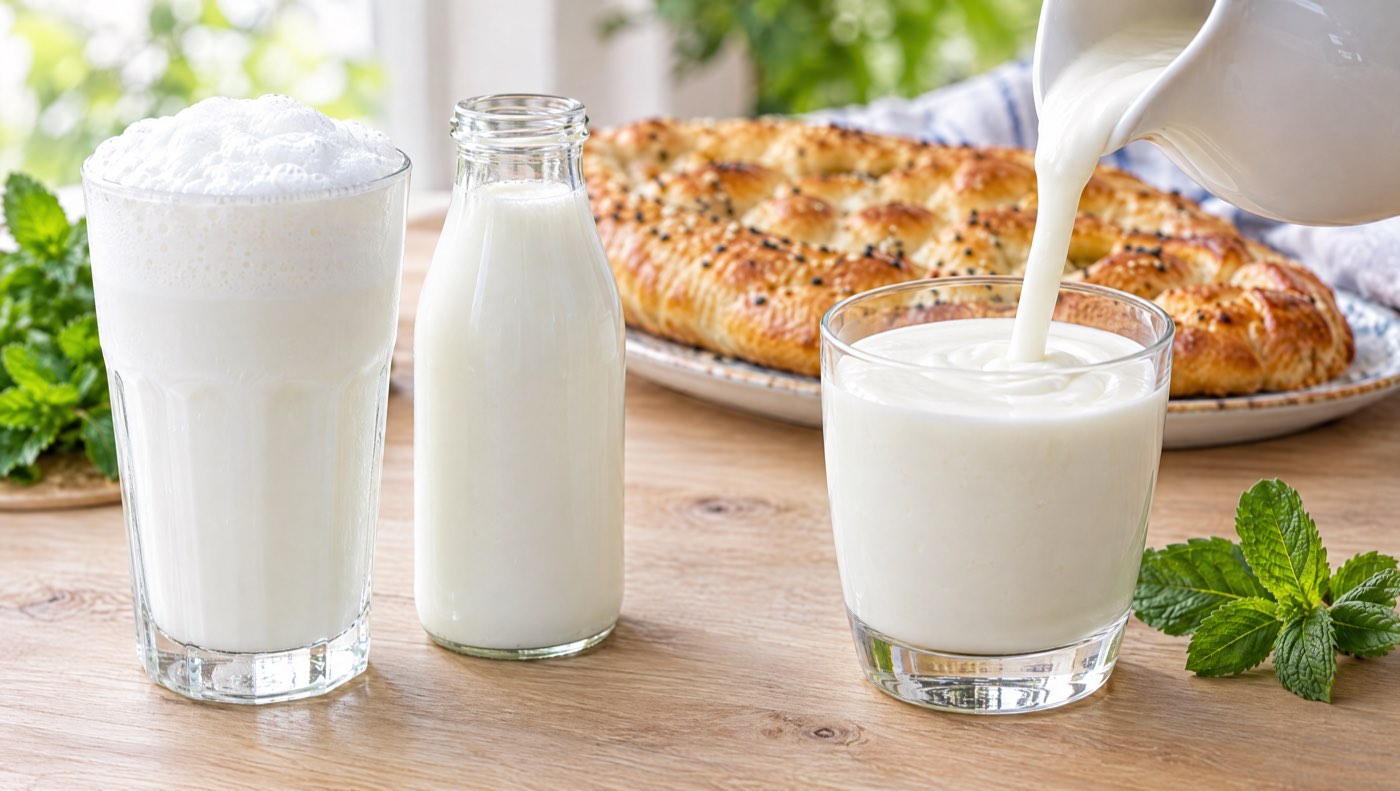
A cool yoghurt drink: Our Homemade Turkish Ayran is another lovely pairing. Its cool, lightly salted flavour balances the richness of the pastry.
A little Turkish ezme: If you enjoy something with a bit of spice, try samsa with our Turkish Ezme Salad.
And if you're serving samsa to friends or family, I'd recommend making a selection of different fillings.
That way, everyone gets to discover their favourite.
Bringing a Little Taste of Uzbekistan to Tetouan
One of the reasons we started Samarkand Bakery was to share foods that people here in Tetouan might not have had the opportunity to try before.
And samsa is a lovely place to begin.
It's familiar enough to appeal to anyone who enjoys a good savoury pastry, but different enough to introduce something new.
Our samsa is prepared in our home kitchen, using recipes inspired by Uzbek baking traditions, and baked fresh for weekend orders.
You can choose from our flaky Meat Samsa, comforting Pumpkin Samsa, Chicken Samsa and Ochiq Samsa.
You can explore the full selection on our Samarkand Bakery menu.
We take pre-orders for Saturday and Sunday collection at Wilaya Centre in Tetouan.
And if you're trying Uzbek food for the first time, we'd love to hear which variety becomes your favourite!
Frequently Asked Questions About Uzbek Samsa
Is it called samsa or somsa?
Both spellings are used in English. Somsa is closer to the Uzbek name, while samsa is also widely recognised internationally.
Is Uzbek samsa baked or fried?
Uzbek samsa is traditionally baked, either in a clay tandoor or a conventional oven. This is one of the main differences from the commonly deep-fried Indian or Pakistani samosa.
What meat is used in traditional Uzbek samsa?
Lamb and mutton are traditional choices, although beef is also common. Our Samarkand Bakery Meat Samsa is made with seasoned minced beef and onions.
Is Uzbek samsa spicy?
Usually not in the chilli-hot sense. Traditional fillings often rely on onions, black pepper, cumin and the natural flavour of the meat. Recipes vary between families and regions.
Can Uzbek samsa be vegetarian?
Yes! Pumpkin and potato samsa are popular meat-free varieties. Our Pumpkin Samsa is a lovely option if you prefer a vegetable filling. Always check individual ingredients and allergen information.
Can you reheat samsa?
Yes. Keep cooked samsa refrigerated promptly, and reheat thoroughly in an oven until piping hot throughout. The oven is usually better than the microwave for restoring the pastry's crispness.
Where can I buy Uzbek samsa in Tetouan?
You can order freshly baked Uzbek samsa from Samarkand Bakery for weekend collection at Wilaya Centre, Tetouan.
A Little Golden Parcel of Home
I sometimes think it's remarkable how much meaning can be wrapped inside something as simple as pastry.
To someone trying Uzbek samsa for the first time, it might just be a delicious savoury snack.
But for many Uzbek families, it's also a familiar smell, a favourite bakery, a childhood memory, or something lovingly prepared when guests come to visit.
And that's what I find so beautiful about traditional food. It carries little pieces of home wherever it goes.
Here at Samarkand Bakery, we're very happy to bring a little of that tradition to Tetouan, one freshly baked samsa at a time.
And perhaps the next time you bite into one, you'll imagine yourself wandering through a bustling bazaar in Samarkand, with the smell of warm bread and pastries filling the air.
From the heart of Uzbekistan to our little kitchen in Morocco, made with love.
Samarkand Bakery