One of the questions we get asked quite often at Samarkand Bakery is, “Is your Turkish Ayran the same as Moroccan lben?”
And I can completely understand why people ask.
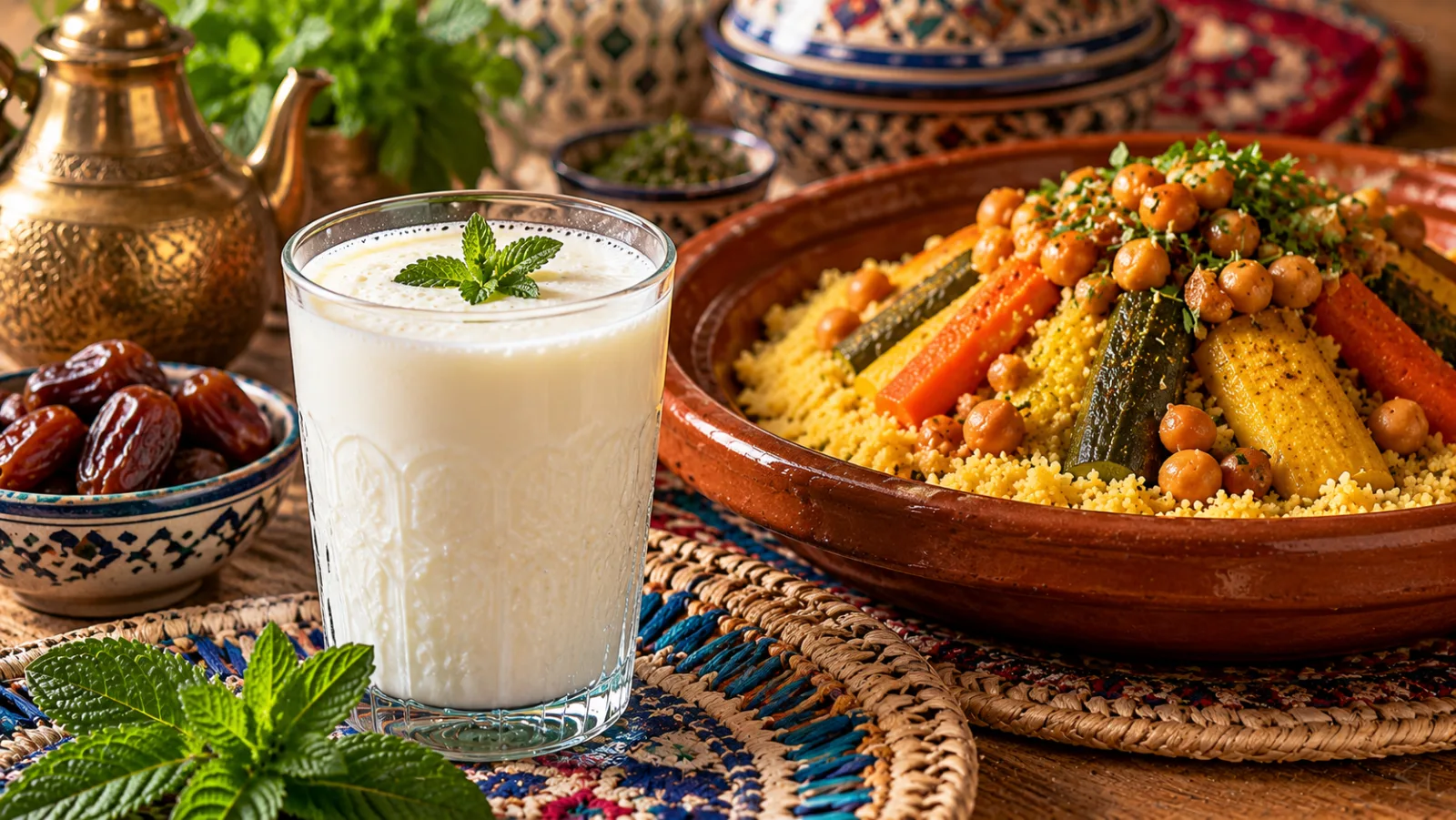
If you've grown up in Morocco, you'll already be familiar with lben (لبن). That lovely, slightly sour milk drink that's often served cold alongside couscous, or enjoyed with bread and dates. It's one of those familiar tastes that many people associate with home, family meals and Moroccan food traditions.
So when someone sees our Turkish Ayran, with its milky white colour and slightly tangy flavour, it's only natural to wonder whether it's simply another name for the same thing.
The short answer is they're very similar, but they're not quite the same.
And to make things a little more interesting, there's also kefir, another fermented milk drink that we actually use to make our own Ayran here at Samarkand Bakery.
So I thought it would be nice to explain the differences, share a little of the history behind these drinks, and show you why something as simple as fermented milk can have so many variations around the world.
First, Let's Talk About Moroccan Lben
I think the best place to start is with the drink most of our customers already know.
Moroccan lben has been part of the country's food traditions for generations. It's refreshing, slightly sour and wonderfully familiar, particularly when served cold.
And, of course, who can forget a bowl of couscous accompanied by a glass of lben?
There's something about that combination that just works. The richness of the couscous, the vegetables, the meat and the cool tanginess of the lben make a lovely pairing.
Traditionally, Moroccan lben is made by allowing milk to ferment naturally. The fermented milk is then churned, separating the butter from the liquid. That remaining tangy liquid is lben.
In fact, this traditional method is closely connected to Moroccan butter-making, particularly the production of zebda beldiya.
Today, you'll find different versions of lben, from traditionally prepared homemade varieties to the cultured products sold in supermarkets.
Some are quite thin, while others have a slightly thicker consistency. Some taste gently sour, while others have a stronger fermented flavour.
And I think that's worth remembering, because not every glass of Moroccan lben tastes exactly the same.
What they share is that lovely tangy character that makes lben so recognisable.
So What Exactly Is Turkish Ayran?
Now let's travel a little further east, to Turkey.
If you've ever visited Turkey, you'll probably have noticed Ayran everywhere.
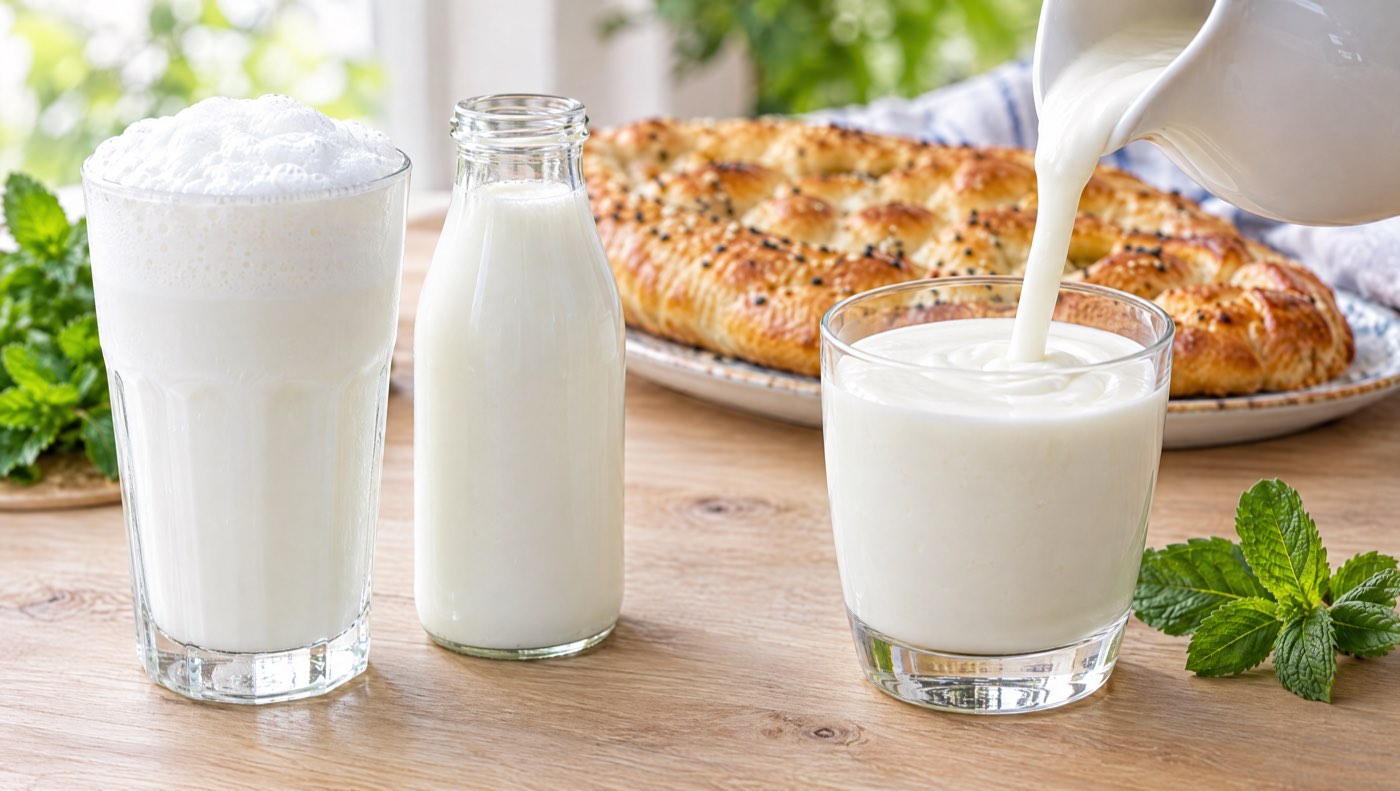
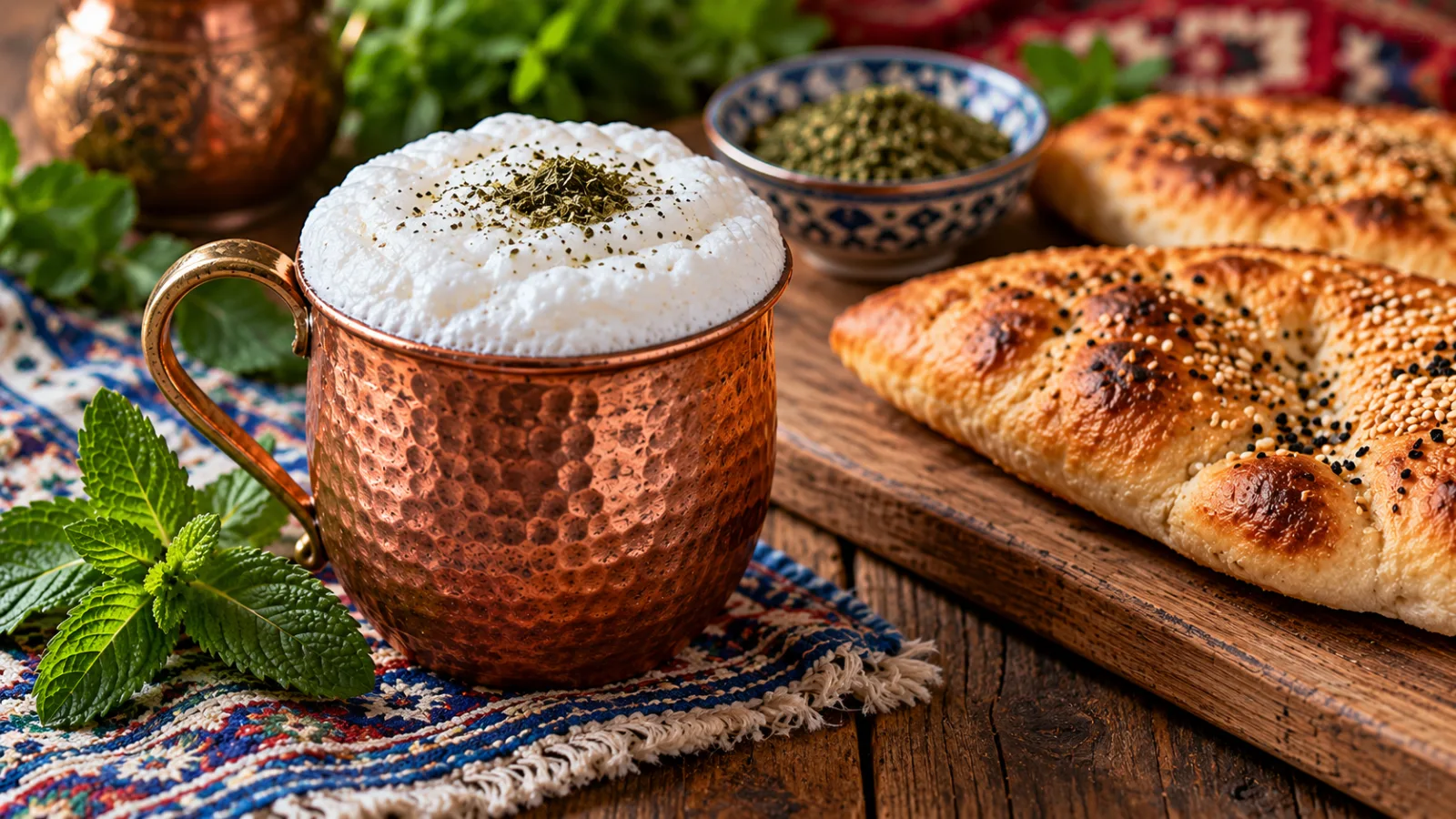
It's served with kebabs, pide, gözleme, börek and all sorts of savoury dishes. You can buy it in bottles and cups, or enjoy it freshly prepared with a beautiful layer of foam on top.
And unlike many drinks we associate with cafés and restaurants, Ayran is wonderfully simple.
It's made with just three ingredients:
-
Plain yoghurt
-
Cold water
-
Salt
That's it!
The yoghurt is mixed with water until it becomes smooth and drinkable, then a little salt is added to bring out the flavour.
It might sound unusual if you've never tried a salted yoghurt drink before, but once you taste it alongside something savoury, it makes perfect sense.
I particularly enjoy Ayran with grilled meat or freshly baked pastries. The cool, slightly salty flavour is such a lovely contrast to warm, rich food.
And that's exactly why we offer it alongside our Uzbek and Turkish bakes at Samarkand Bakery.
Ayran and Lben: Similar Drinks, Different Traditions
This is where the comparison becomes interesting.
Both Ayran and Moroccan lben are refreshing, tangy dairy drinks. Both are traditionally enjoyed cold, and both have a long connection with everyday food and hospitality.
But the main difference is how they're prepared.
Moroccan lben is traditionally a fermented milk product, often made through the process of churning soured milk and is known to be thicker in consistency most of the time.
Turkish Ayran is a drink prepared by mixing yoghurt with water and salt.
So while both can have a similar flavour, they arrive at that flavour in different ways.
Ayran also has that distinctive salty taste, which is part of what makes it so refreshing alongside savoury food.
Lben is generally enjoyed without added salt, although traditional and regional preparations can vary.
And what about the texture?
You might expect lben to be thicker, but that isn't always the case. Traditional lben can be quite thin, while Ayran can be made thicker or lighter depending on how much water is added.
So I wouldn't say one is always thicker than the other.
The easiest way to understand the difference is this:
Lben is a fermented milk drink in its own right. Ayran is a yoghurt-based drink that we prepare with water and salt.
And if you already enjoy Moroccan lben, there's a very good chance you'll enjoy Turkish Ayran too.
Where Does Ayran Come From?
One of the things I love about traditional food is discovering how much history can be hidden behind something we eat or drink every day.
Ayran has strong connections with the Turkic peoples of Central Asia.
Long before modern refrigerators existed, fermenting milk was an important way for communities to preserve it and make use of it.
For nomadic peoples, yoghurt was particularly practical. It could be carried, stored and enjoyed in different ways.
Adding water to yoghurt created a lighter drink, while salt helped give it that distinctive savoury flavour.
Over time, yoghurt drinks became part of food traditions across Central Asia, Anatolia, the Caucasus and the Balkans.
The names and recipes changed from place to place, but the basic idea remained remarkably similar.
I find that fascinating because it reminds me how food traditions travel with people.
And at Samarkand Bakery, where so much of what we make is inspired by Uzbekistan and Turkey, Ayran feels like a natural part of our menu.
And What About Kefir?
Now, this is where things get a little more interesting!
Kefir is another fermented dairy drink, traditionally associated with the Caucasus region.
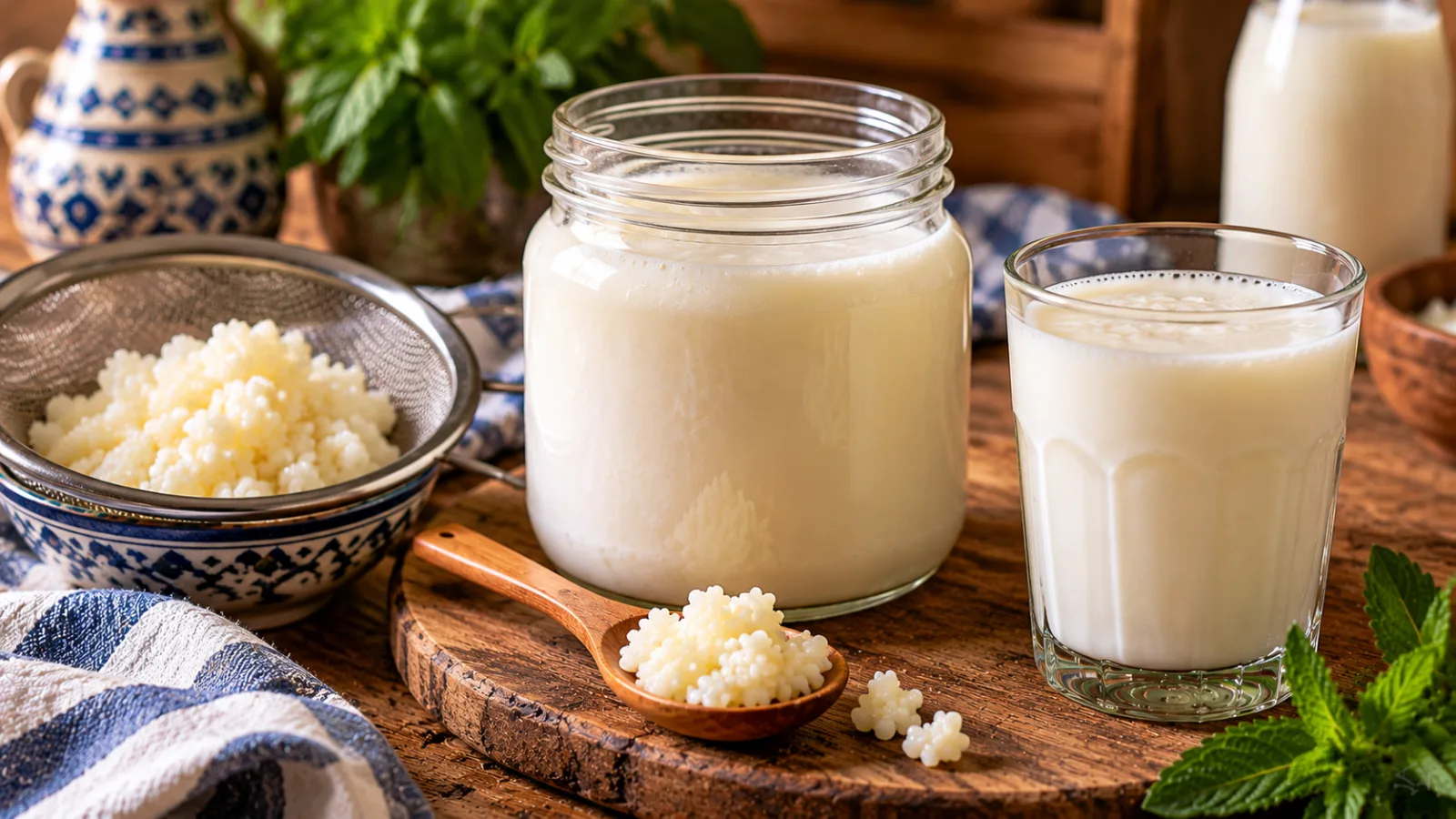
Unlike Ayran, which is prepared by mixing yoghurt with water and salt, traditional milk kefir is made by fermenting milk with kefir grains.
These grains aren't actually cereal grains. They're little clusters of bacteria and yeasts that work together to ferment the milk.
They look a little like tiny pieces of cauliflower, which I always think is quite an amusing comparison!
As the milk ferments, it develops a pleasantly sour flavour. Depending on how it's made, kefir can also have a slightly fizzy character.
Kefir is often enjoyed on its own, usually without salt, and many people appreciate it for its live cultures.
And unlike Ayran, which can be prepared in a couple of minutes, traditional kefir needs time to ferment.
But here's something you might not expect.
You can actually use kefir yoghurt to make Ayran.
And that's exactly what we do at Samarkand Bakery.
Ayran vs Moroccan Lben vs Kefir: What's the Difference?
Here's a simple comparison to help make sense of all three drinks.
| Turkish Ayran | Moroccan Lben | Kefir | |
|---|---|---|---|
| Traditional roots | Turkic and Turkish food cultures | Moroccan and North African traditions | Caucasus |
| Main ingredients | Yoghurt, water, salt | Fermented milk | Milk and kefir cultures |
| Preparation | Mixed and whisked | Fermented, traditionally churned | Fermented with kefir grains or cultures |
| Flavour | Tangy and salty | Tangy, usually unsalted | Tangy, sometimes slightly yeasty |
| Texture | Smooth, light or frothy | Varies from thin to slightly thick | Often creamy, sometimes lightly fizzy |
| Commonly enjoyed | With savoury meals | With couscous, bread and dates | On its own or with breakfast |
| Added salt | Usually yes | Usually no | Usually no |
As you can see, they're all part of a wider family of fermented dairy traditions.
And although they have their differences, I think they have more in common than people might expect.
Our Homemade Ayran at Samarkand Bakery
Now that we've talked about the three drinks, I can explain a little more about how we make our own.
At Samarkand Bakery, we prepare our Turkish Ayran using natural probiotic kefir yoghurt, spring water and a little salt.
We chose kefir yoghurt because we enjoy its slightly tangier flavour, and it makes a lovely base for a smooth, refreshing Ayran.
The water lightens the yoghurt, while the salt brings everything together.
The result is a drink that feels familiar if you enjoy Moroccan lben, but with the distinctive salty freshness of Turkish Ayran.
I sometimes think of it as a little meeting of different food traditions.
We're making a Turkish drink, using a fermented dairy product associated with the Caucasus, and sharing it with our customers here in Morocco, where lben is already such a familiar part of everyday life.
And isn't that a lovely example of how food connects us?
Our Ayran comes in a 250 ml bottle, and I always recommend enjoying it properly chilled.
Each bottle contains approximately 94 calories and 4.9 g of protein, based on our recipe.
It contains milk and is prepared without added sugar, although the kefir naturally contains milk sugars.
You can find our Homemade Turkish Ayran here.
What Should You Eat with Ayran?
This is probably my favourite part of the article, because Ayran really comes into its own when paired with food.
Of course, you can enjoy a cold glass on its own, particularly on a warm day.
But I think it's at its best alongside something savoury.
Uzbek Meat Samsa
Our Uzbek Meat Samsa is one of my favourite things to enjoy with Ayran, especially in the summer months.
The flaky, golden pastry and savoury meat-and-onion filling are lovely with something cold and slightly salty.
It's a simple combination, but one that works beautifully.
Turkish Gözleme
A freshly cooked gözleme, particularly one filled with spinach and cheese or seasoned meat, is another wonderful pairing.
The warm, savoury filling and soft flatbread go so well with a chilled yoghurt drink.
You can explore our different gözleme fillings on the Samarkand Bakery menu.
Turkish Pide
If you enjoy Turkish pide, try it with Ayran instead of a sweet drink.
I particularly like the combination with minced beef pide, where the refreshing Ayran balances the richness of the topping.
Uzbek Plov
And then there's Uzbek plov.
If you've followed Samarkand Bakery for a while, you'll know how much we love this traditional dish.
I've often said that Uzbek plov is to an Uzbek what couscous is to a Moroccan.
It's a dish associated with family, hospitality and gathering around the table.
And just as Moroccan couscous can be enjoyed with lben, Uzbek plov can be lovely with cold Ayran.
You can find our Sunday plov on our bakery menu.
Can You Make Ayran with Kefir?
Absolutely!
In fact, that's the idea behind our own version.
Instead of using ordinary natural yoghurt, you can use plain kefir yoghurt as the base.
The method is exactly the same: mix it with cold water and a little salt until smooth.
The flavour will usually be a little tangier, depending on the kefir you use.
And because kefir products vary in thickness, you may need to adjust the amount of water.
If you're curious about trying something slightly different from ordinary Ayran, I'd definitely recommend giving it a go.
How to Make Kefir at Home
If you'd like to try making traditional milk kefir from scratch, you'll need some milk kefir grains.
These are often shared between people who make kefir regularly because the grains can grow over time.
For a small batch, you'll need:
-
1 tablespoon milk kefir grains
-
250–500 ml pasteurised milk
-
A clean glass jar
Place the grains and milk in the jar, cover loosely and leave to ferment at a suitable room temperature, away from direct sunlight.
After approximately 18–24 hours, the milk should begin to thicken and develop a tangy flavour.
Strain out the grains using clean utensils, refrigerate the finished kefir promptly and transfer the grains to fresh milk if you're making another batch.
Fermentation time varies depending on the temperature and the activity of the grains.
If you're new to home fermentation, it's worth following reliable food-safety guidance and using properly cleaned equipment.
I wouldn't recommend trying to ferment raw milk at home, particularly in hot weather.
Other Yoghurt Drinks Around the World
Once you start looking into yoghurt and fermented milk drinks, you realise just how many cultures have their own versions.
And I find that rather lovely.
In Iran, there's Doogh, a refreshing yoghurt drink that can include dried mint and sometimes a little fizz.
In Armenia, you'll find Tan, another salted yoghurt drink that's closely related to Ayran.
In India and Pakistan, there's Lassi, which can be sweet or salty. Mango lassi is probably one of the best-known variations, although traditional salted lassi is also very popular.
And here in Morocco, of course, we have our much-loved Lben.
Different names, different ingredients and different traditions, but all built around something as simple as milk and fermentation.
It's a wonderful reminder that people in different parts of the world often arrive at surprisingly similar foods.
How to Store Ayran and Kefir
Because these are dairy drinks, proper refrigeration is important.
Homemade Ayran is best enjoyed freshly prepared, although it can be kept in a clean, closed container in the fridge for a short period.
You might notice a little separation after it has been standing.
That's completely normal. Just give it a gentle shake before drinking.
Our Samarkand Bakery Ayran should be kept refrigerated and consumed within three days of purchase, following the instructions on the bottle.
Kefir should also be kept refrigerated once fermentation is complete. Its flavour may become more sour over time.
And during Tetouan's warmer months, I always recommend getting chilled dairy drinks back into the fridge as soon as possible.
Frequently Asked Questions
Is Turkish Ayran the same as Moroccan Lben?
Not exactly.
They have similar tangy dairy flavours, but traditional Moroccan lben is made through milk fermentation, often followed by churning, while Turkish Ayran is made by mixing yoghurt with water and salt.
If you enjoy lben, though, Ayran will probably taste quite familiar.
Is Ayran salty or sweet?
Traditional Turkish Ayran is salty.
That's one of its defining characteristics and one of the reasons it goes so well with savoury food.
Sweet yoghurt drinks belong to other traditions, such as sweet lassi.
Is Ayran thicker than Moroccan Lben?
Not necessarily.
The consistency of both drinks varies depending on how they're prepared.
Ayran can be quite thin or pleasantly creamy, while traditional lben can also range from thin to slightly thick.
Can you make Ayran with kefir?
Yes, absolutely.
We use natural kefir yoghurt in our own Ayran at Samarkand Bakery.
It gives the drink a slightly tangier flavour while keeping the refreshing character of traditional Ayran.
Does Ayran contain probiotics?
It depends on the yoghurt used.
Ayran made with yoghurt containing live cultures may retain those cultures in the finished drink.
Our version is made with probiotic kefir yoghurt, although the precise number and types of live microorganisms in the finished bottle are not independently measured.
Is Ayran good with couscous?
It certainly can be!
Although Moroccan lben is the more traditional choice, there's no reason you couldn't enjoy Ayran alongside couscous.
The cool, tangy flavour works particularly well with rich savoury dishes.
Why doesn't my homemade Ayran have any foam?
Try using very cold water and whisking or blending a little more vigorously.
The thickness of your yoghurt also makes a difference.
Some yoghurts produce more foam than others, so don't worry if yours isn't quite as frothy as the Ayran you might see served in Turkish cafés.
Where can I buy Turkish Ayran in Tetouan?
You can order our Homemade Turkish Ayran directly from Samarkand Bakery.
We prepare it fresh for our weekend orders, with collection at Wilaya Centre in Tetouan on Saturdays and Sundays.
You can also add it to an order of samsa, gözleme, pide or any of our other savoury bakes.
A Little Taste of Turkey, Right Here in Tetouan
So, are Ayran and Moroccan lben the same?
Not quite. But they're certainly close relatives, and I think that's what makes the comparison so interesting.
One comes from Morocco's long tradition of fermented dairy foods, while the other has travelled through the food cultures of Central Asia and Turkey.
And then there's kefir, adding another little chapter to the story.
What I particularly enjoy is seeing how something so simple can connect different places and traditions.
Here at Samarkand Bakery, we love introducing our customers to foods they might not have tried before, but I also enjoy discovering the similarities between those foods and the things people already know and love here in Morocco.
Sometimes, trying something new doesn't mean stepping very far away from what's familiar.
It might simply mean enjoying your favourite savoury pastry with a cold bottle of Turkish Ayran instead of Moroccan lben.
And who knows? You might discover a new favourite combination.
From Samarkand to Tetouan, there's always something lovely to share around the table.
With love from our kitchen,
Samarkand Bakery