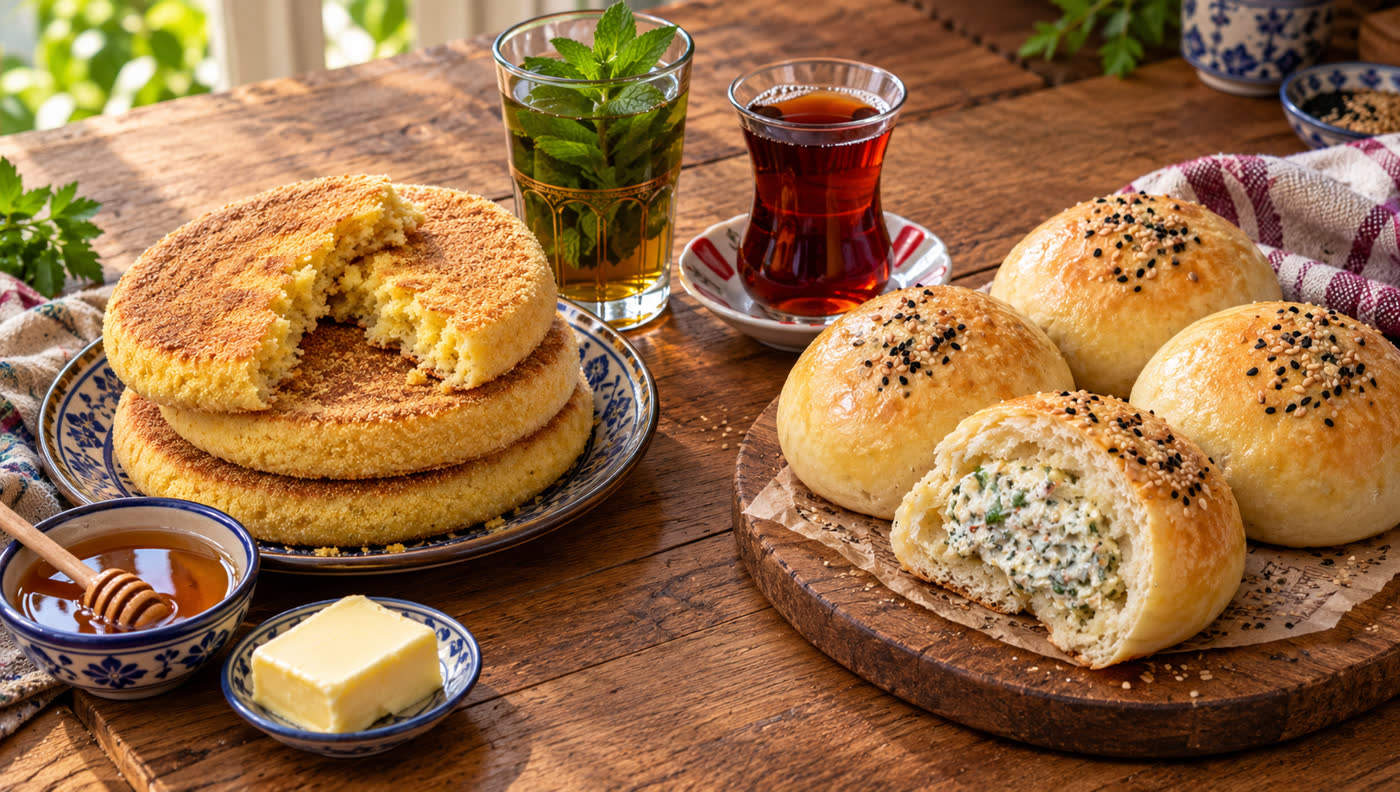
Harcha is a Moroccan favourite, a semolina flatbread, raised with baking powder and cooked in a pan, with a sandy crumb that falls apart as you break it. Pogaça is a Turkish flour roll, raised with yeast and baked in the oven, soft like brioche and often filled. People eat them at the same moments, in the morning or with afternoon tea, but they are very different breads.
Below: how each one is made, what sets them apart point by point and how to serve and store them.
Harcha, the Moroccan morning flatbread
Everyone in Morocco knows harcha. The dough is semolina, often a mix of fine and medium, with melted butter or oil, milk, a little sugar, a pinch of salt and baking powder. It is barely kneaded. The dough is shaped into thick discs, rolled in more semolina, then cooked over a low heat in a heavy pan with little or no fat until both sides are golden.
The secret is the low heat: too hot and the outside burns before the inside is cooked. Some people add fresh cheese to the dough or a pinch of nigella seeds, and both variations work very well.
The semolina does all the work: a grainy crust, a crumbly inside and a buttery taste. Harcha is eaten warm, split open, with honey and butter, fresh cheese, amlou or jam, and of course a glass of mint tea. You find it in the morning at small street stalls as well as at home, and during Ramadan it often has its place on the ftour table.
Pogaça, the roll of Turkish bakeries
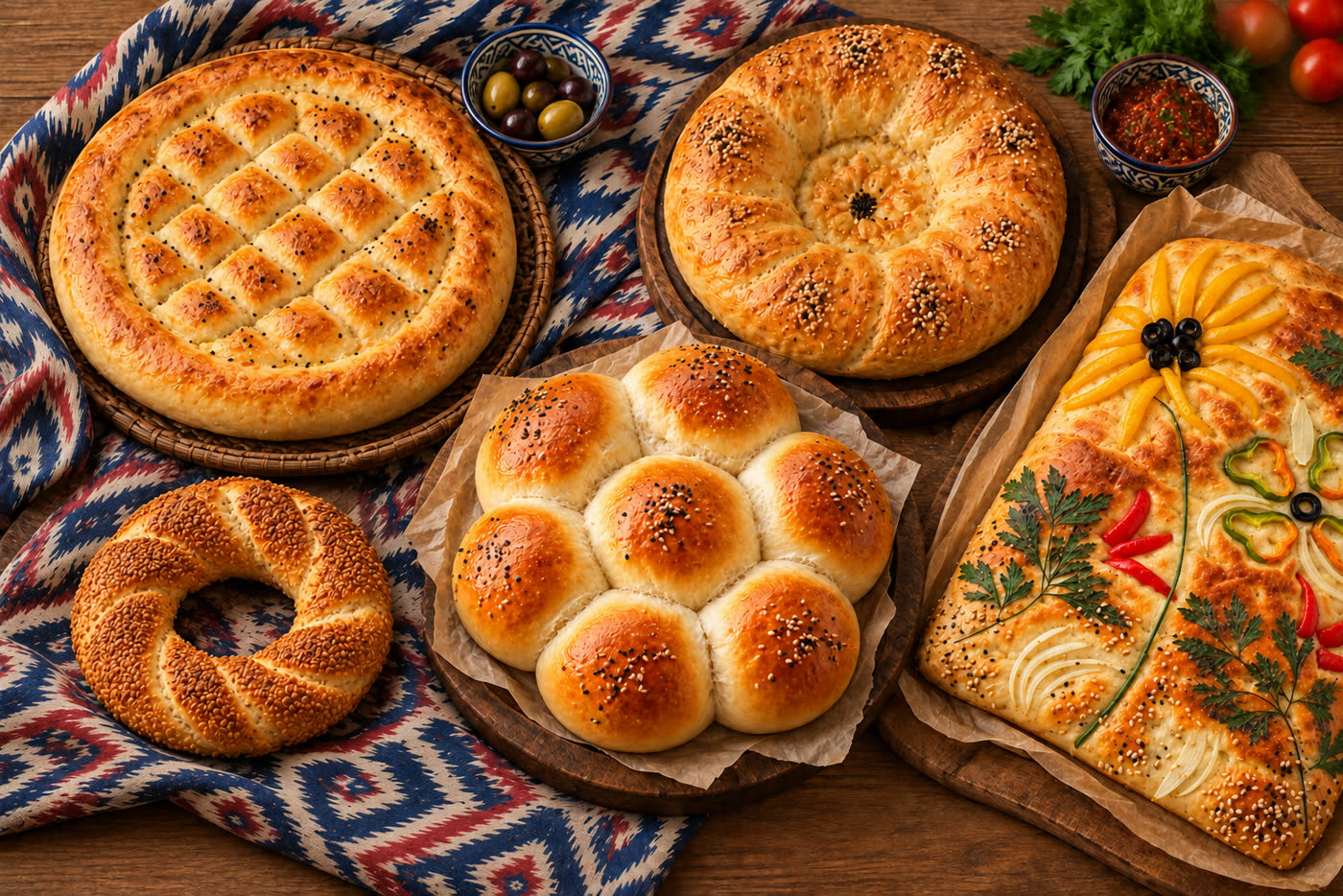
In Turkey, pogaça is everywhere from early morning, in bakeries (fırın) and in neighbourhood pastry shops (pastane). It is an enriched yeast dough: flour, milk, yoghurt, egg, oil or butter, and yeast. The dough is left to rise, shaped by hand into rounds or crescents, filled, brushed with egg and baked. Many are topped with nigella or sesame seeds.
The classic fillings are white cheese, spiced potato or olives. It is eaten with black Turkish tea served in small tulip-shaped glasses, usually with some cheese, olives and tomatoes on the side.
A small detail: the word pogaça shares its origin with Italian focaccia. Both come from the Latin panis focacius, bread baked in the hearth. Related breads exist all over the Balkans under the name pogača.
Harcha vs pogaça: the differences
| Harcha | Pogaça | |
|---|---|---|
| Grain | Durum wheat semolina | Wheat flour |
| Rise | Baking powder | Yeast, the dough is proved |
| Time to make | About 30 minutes | About 2 hours, with rising |
| Cooking | In a pan, little or no fat | In the oven, egg-washed |
| Texture | Sandy and crumbly | Soft, close to brioche |
| Filling | Mostly plain, topped after cooking | Usually filled before baking |
| Taste | Butter and semolina, slightly sweet | Usually savoury |
What they have in common
For all that, the two breads live very similar lives. Both are made by hand in small pieces meant for sharing. Both are eaten warm, at breakfast or late in the afternoon, and neither comes without a glass of tea. If you love your morning harcha, pogaça is probably the Turkish bread that will win you over first.
Two breakfast tables
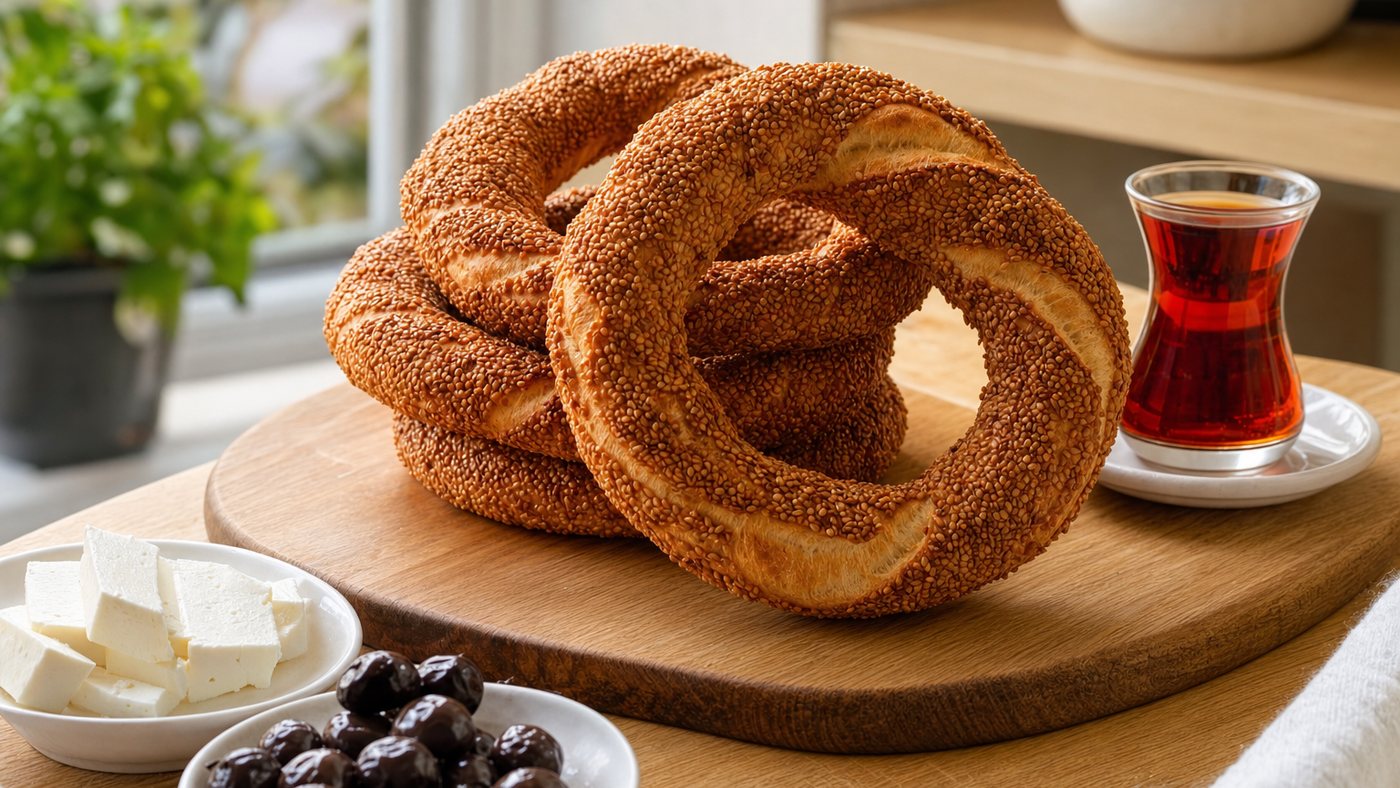
In Morocco, harcha shares the table with msemen, baghrir, olive oil, amlou and mint tea. In Turkey, pogaça is part of kahvaltı, the big weekend breakfast, with white cheese, olives, tomatoes, cucumbers, eggs, honey and jams, sesame-covered simit rings, and tea that never stops coming. Two different ways of taking your time in the morning, with the same idea of sharing.
Our pogaça in Tetouan
We make our pogaça with a dough enriched with milk, yoghurt and egg, shaped by hand and baked until golden. There are three on the menu:
- Cheese Pogaça: mozzarella, labneh with garlic and herbs.
- Veggie Pogaça: sautéed carrot, courgette, potato, peppers and onion.
- Black Olive Pogaça: the dough is spread with homemade black olive paste, rolled and tied into a knot.
They contain gluten, eggs and dairy.
Storing and reheating
Harcha is best on the day. The next day, warm it for a few minutes in a dry pan. It freezes well: let it cool, wrap it, then reheat it straight from the freezer in a pan.
Pogaça keeps for two days in a closed box. To warm it up, five minutes in a hot oven at 180 °C is enough. Skip the microwave, it makes them rubbery.
Frequently asked questions
Is pogaça sweet or savoury?
Sweet versions exist in Turkey, but pogaça is usually savoury. All three of ours are.
Can you fill harcha like pogaça?
Yes, plenty of families split harcha and fill it with fresh cheese or jams. The difference is that the filling goes in after cooking, while a pogaça filling bakes inside the dough. There is an Algerian version of harcha that is cooked with a layer of date paste in the middle, I forgot its name though, if anyone knows it please leave the name for us in the comments ;).
Which one is quicker to make?
Harcha, by far: half an hour is enough because the dough doesn't need to rise. Pogaça takes about two hours because of the rising time.
What is the difference between harcha and msemen?
Both are Moroccan pan-cooked flatbreads, but msemen is a laminated dough, folded several times with butter or oil, while harcha is a thick, sandy semolina dough that isn't folded at all. Msemen is soft and pulls apart in layers; harcha crumbles.
Where can I buy pogaça in Tetouan?
On our website, any time. Orders are collected on Saturday or Sunday at Wilaya Centre in Tetouan, between 10:00 and 18:30. Everything is baked to order.