Börek is a savoury Turkish pastry made with yufka, large sheets of very thin dough rolled or layered around a filling, then baked or fried. The classic fillings are white cheese with parsley, spinach, minced meat and potato. Depending on how the dough is folded, it changes shape and name: a cigar, a spiral, a long roll or a tray.
Here are its shapes, its Balkan cousin, how it compares with pastilla and briouates, and an easy recipe to make at home.
Yufka, the dough behind börek
It all starts with yufka: flour, water, salt and sometimes an egg. The dough is rolled out by hand with an oklava, a long, thin rolling pin like a broom handle, into large discs you can almost see through. In Turkey you can also buy it ready-made, in stacks of round sheets, from bakeries and markets.
Don't confuse it with filo, the pastry used for baklava, which is even thinner and more fragile. Yufka has a bit more body. It can be rolled, folded and even dipped in boiling water without tearing.
Where does börek come from?
Börek as we know it developed in Ottoman cooking, and the empire spread it from the Balkans to the Middle East. Its roots are older and more debated. Many historians look to the Turkic peoples of Central Asia, who already made thin filled doughs. The origin of the word is debated too: it is often linked to a Turkic root to do with rolling or twisting, though not every specialist agrees.
The main shapes of börek
- Su böreği, "water börek": the sheets are dipped in boiling water for a few seconds, then layered in a dish with butter and cheese. Soft and rich, it is a little like lasagne. The slowest to make, and for many Turks the best.
- Sigara böreği, "cigarette börek": triangles of yufka rolled tightly around cheese and parsley, then fried. They are served at breakfast or with tea.
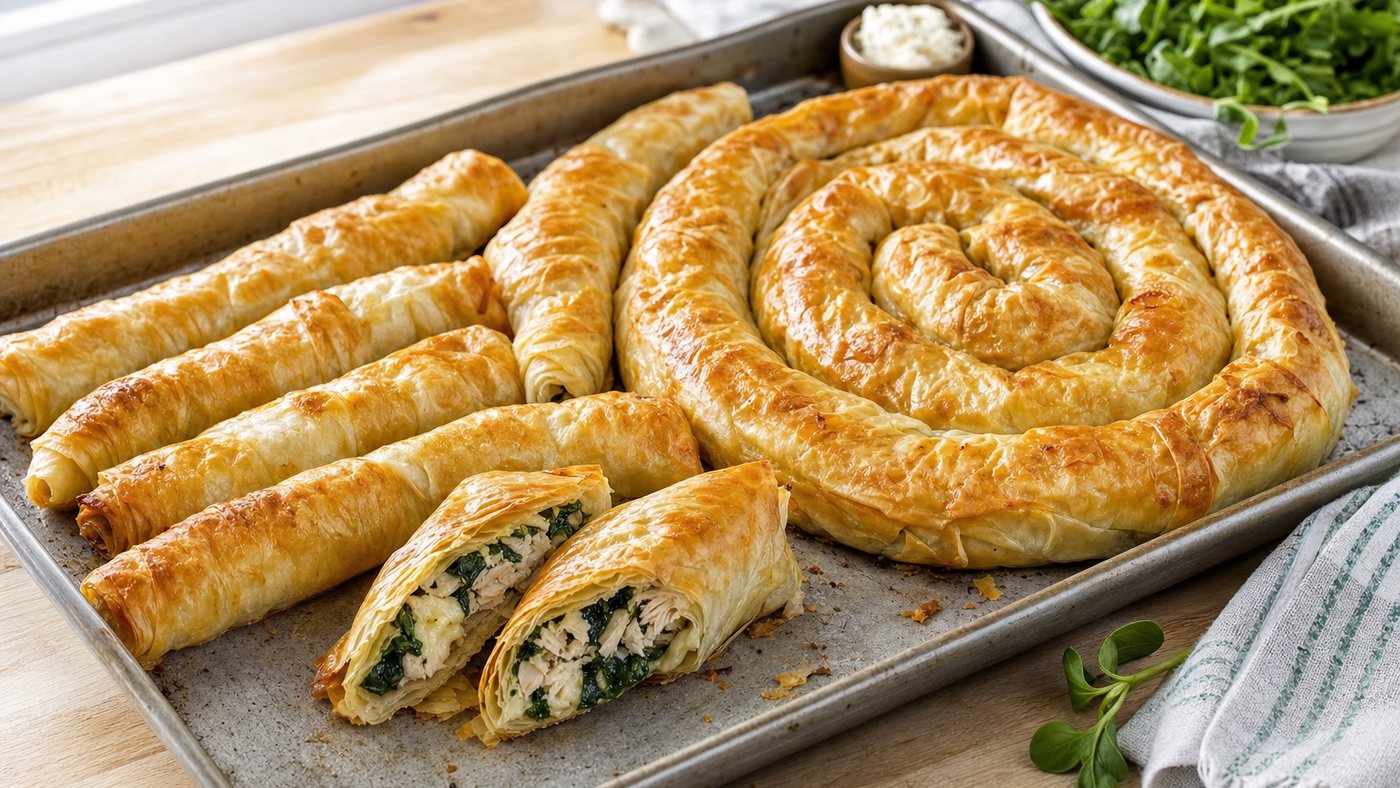
- Kol böreği, "arm börek": long filled rolls, laid side by side or coiled in a round dish, then cut into pieces.
- Gül böreği, "rose börek": shorter rolls, each coiled into its own little spiral.
- Tepsi böreği, "tray börek": layers of yufka and filling in a large dish, soaked with a mix of egg, milk and oil, and cut into squares once baked.
There is also çiğ börek, a fried meat turnover brought by the Crimean Tatars and very close to the cheburek of Central Asia.
The classic fillings
The most common pairing is salty white cheese, similar to feta, mixed with chopped parsley. Then come spinach with onion, minced meat cooked with onion, spiced potato, and leek, a winter favourite. Chicken is less traditional, but you see it more and more, often with spinach and a melting cheese.
From Turkish börek to Balkan burek
The Ottoman Empire left börek wherever it went. In Bosnia, burek is a large spiral of thin dough baked in a round tin, and the word strictly means the meat version. With cheese it is called sirnica, with spinach zeljanica. Across much of the Balkans it is sold from early morning in bakeries and eaten with drinking yoghurt. Closer to home, the name of Algerian bourek and Tunisian brik is often traced back to the Ottoman börek.
Börek, pastilla and briouates compared
In Morocco, the pastries everyone knows are pastilla and briouates. The idea is the same, very thin dough around a filling, but the rest is quite different.
| Börek | Pastilla | Briouates | |
|---|---|---|---|
| Dough | Yufka, rolled with a pin | Warqa, dabbed onto a hot plate | Warqa |
| Shape | Rolls, spirals, cigars, trays | Large round pie | Triangles or cigars |
| Fillings | Cheese, spinach, meat, potato | Chicken or pigeon with almonds, or seafood | Kefta, chicken, cheese, or almonds with honey |
| Cooking | Mostly baked, sometimes fried | Baked | Usually fried |
| Taste | Savoury | Sweet and savoury | Savoury or sweet |
| When | Breakfast, tea, snacks | Celebrations and weddings | Ramadan, receptions |
The big difference is the dough. Warqa turns very crisp. Yufka is thicker and stays slightly soft inside, especially in baked börek.
Recipe: spinach and cheese spiral börek
The spiral is the easiest shape to get right at home. For a 26 to 28 cm round tin, serving 6 to 8:
- 3 large yufka sheets, or 12 sheets of filo
- 400 g fresh spinach, or 250 g frozen spinach, well drained
- 1 onion and 2 tablespoons olive oil
- 200 g salty white cheese such as feta, crumbled
- For brushing: 2 eggs, 150 ml milk and 80 ml oil, whisked together
- 1 egg yolk and a tablespoon of sesame or nigella seeds
- Soften the sliced onion in the oil for 5 minutes, add the spinach and let it wilt. Drain, cool, then mix with the cheese and some pepper. Taste before adding salt: the cheese is already salty.
- Cut each yufka sheet in half. Brush a half sheet with the egg mixture, spread a line of filling along the straight edge and roll it loosely into a long log.
- Coil the first log like a snail in the middle of the tin, then carry on the spiral with the others.
- Pour the rest of the mixture over the top, brush with egg yolk and scatter with seeds. Leave for 20 minutes if you have time: the dough soaks up the liquid and the börek ends up softer.
- Bake at 180°C for 35 to 40 minutes, until the top is deep golden. Let it cool for 10 minutes before cutting.
With filo, stack 3 sheets, brushing each one, before rolling. Filo dries out quickly, so keep the waiting sheets under a damp tea towel.
Storing and reheating börek
Börek is best on the day, still warm. Keep it in the fridge, well covered, and eat it within 2 days, especially if it contains chicken or meat. To reheat, avoid the microwave, which makes the pastry soggy. Give it 8 to 10 minutes in the oven at 170°C, or a few minutes in a dry, covered frying pan. Unbaked börek freezes well: bake it straight from frozen, adding about ten minutes.
Our mini chicken and spinach börek
We make börek in an individual size: the Mini Chicken & Spinach Borek, at 25 dirhams. The thin dough is made by hand. The filling is chicken breast cooked with onion, garlic and a squeeze of lemon, with spinach, paprika and black pepper. It is then brushed with melted butter, topped with grated mozzarella and baked for about thirty minutes. It contains gluten and dairy. It is a portion for one, handy for lunch or a lunch box.
What to serve with börek
In Turkey, börek is eaten at breakfast with a glass of black tea, or at any time with ayran. At a börekçi, a shop that sells börek by weight from early morning, you will be offered one or the other. At home, serve it with our homemade Turkish ayran, well chilled, and a Turkish ezme salad: its tomatoes, peppers and pomegranate molasses bring the sharpness that balances buttery pastry.
Frequently asked questions
Are börek and burek the same thing?
They are the same family. Burek is the Balkan name, mostly for a large baked spiral.
Can I use warqa instead of yufka?
It will do in a pinch, but the result is different. Warqa is thinner and drier, so the börek will be crisper and less soft. Use two sheets at a time, brush a little less, and keep an eye on the baking time, which is often shorter.
How do I stop börek from being dry?
Brush every layer generously, let it rest before baking, and cover the tin with foil if the top browns too fast.
Is börek eaten hot or cold?
Warm is best. Baked börek is still good at room temperature, which makes it a good picnic dish. Fried börek is best eaten straight away.
Where to find our börek in Tetouan
Add our mini chicken and spinach börek to your order on the Samarkand Bakery website, and collect on Saturday or Sunday, between 10:00 and 18:30, at Wilaya Centre in Tetouan. Everything is made to order for the weekend, so order as early as you can. For a large quantity, message us on WhatsApp before you order, from the contact page on the website.