If you've ever visited a Turkish restaurant, you've probably come across Adana kebab. It's one of Turkey's best-known grilled meat dishes, and once you've tried a good one, it's easy to understand why people love it.
At first glance, you might think it looks rather like Moroccan kefta. After all, both are made from minced meat, shaped onto skewers and cooked over a fire.
But Adana kebab has its own character.
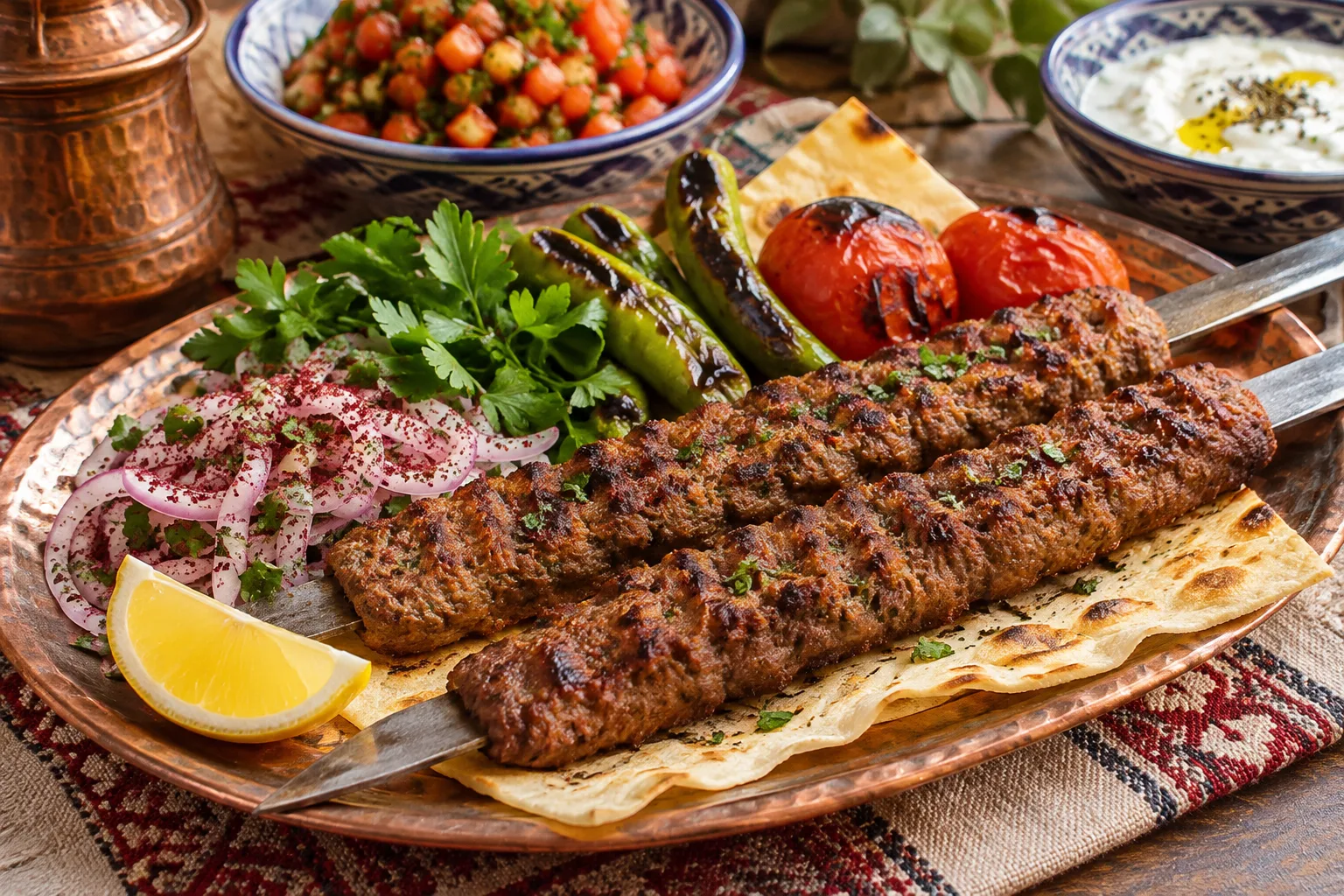
It's traditionally made with lamb, seasoned with red pepper and pressed by hand onto long, flat metal skewers. The kebabs are grilled over charcoal until beautifully browned on the outside and juicy in the middle, then served with warm flatbread, onions and fresh vegetables.
What I particularly like about Turkish cooking is how something made with just a handful of ingredients can have so much flavour.
And Adana kebab is a lovely example of that.
Where Does Adana Kebab Come From?
Adana kebab takes its name from the city of Adana in southern Turkey.
The city lies in the Çukurova region, not far from the Mediterranean coast. It's an area known for its hot summers, agriculture and rich food traditions.
Grilled meat has been part of the region's cooking for generations, although nobody can say with certainty exactly when the first Adana kebab was made.
What we do know is that the dish became closely associated with the city, particularly its long shape, generous use of red pepper and traditional method of preparing the meat.
In fact, Adana kebab is so important to the region that it was officially registered as a Turkish geographical indication on 8 February 2005.
That means there's a recognised traditional standard for how the dish is prepared, including the type of meat, the mincing technique and the cooking method.
Of course, you'll find versions of Adana kebab in Turkish restaurants around the world, and not every restaurant follows the traditional method exactly.
But the original is something quite special.
Why the Meat Is Traditionally Chopped by Hand
One of the most interesting things about traditional Adana kebab is the way the meat is prepared.
Rather than putting the lamb through an electric mincer, traditional cooks use a large, curved chopping knife called a zırh.
The meat is chopped repeatedly on a wooden board until it reaches the right consistency.
It's a skill that takes practice.
The aim is to produce meat that's finely chopped but still has some texture, rather than turning it into a completely smooth paste.
Fat is important too.
Traditional Adana kebab uses sheep meat and, when needed, some sheep's tail fat. As the kebab cooks, the fat helps keep the meat moist and gives it its rich flavour.
If you've ever made homemade kefta using very lean mince, you'll know how easily it can become dry.
Adana kebab is a good reminder that the quality of the meat, its fat content and the way it's handled can matter just as much as the seasoning.
The Red Pepper Makes All the Difference
Unlike Moroccan kefta, which often includes cumin, coriander, parsley, onion and paprika, traditional Adana kebab has a much simpler seasoning.
Red pepper and salt are the main ingredients.
Some recipes use dried red pepper, while others include finely chopped fresh red pepper as well.
You may also come across pul biber, the Turkish red pepper flakes used in so many dishes.
Depending on the variety, they can give food a gentle warmth or a more noticeable kick.
What's interesting is that the traditional recipe doesn't rely on a long list of spices.
The flavour comes from the lamb, the red pepper and the way the meat is cooked.
Why Are Adana Kebabs So Long?
If you look at a traditional Adana kebab, you'll notice that it isn't made from several little pieces of meat.
Instead, the minced meat is pressed along one wide, flat metal skewer.
The cook uses their fingers to shape and secure the meat, leaving small indentations along its length.
These wide skewers help support the meat while it cooks.
Traditionally, the kebabs are grilled over glowing charcoal on a mangal, a Turkish barbecue.
As the meat cooks, the outside develops those lovely browned edges while the inside stays moist.
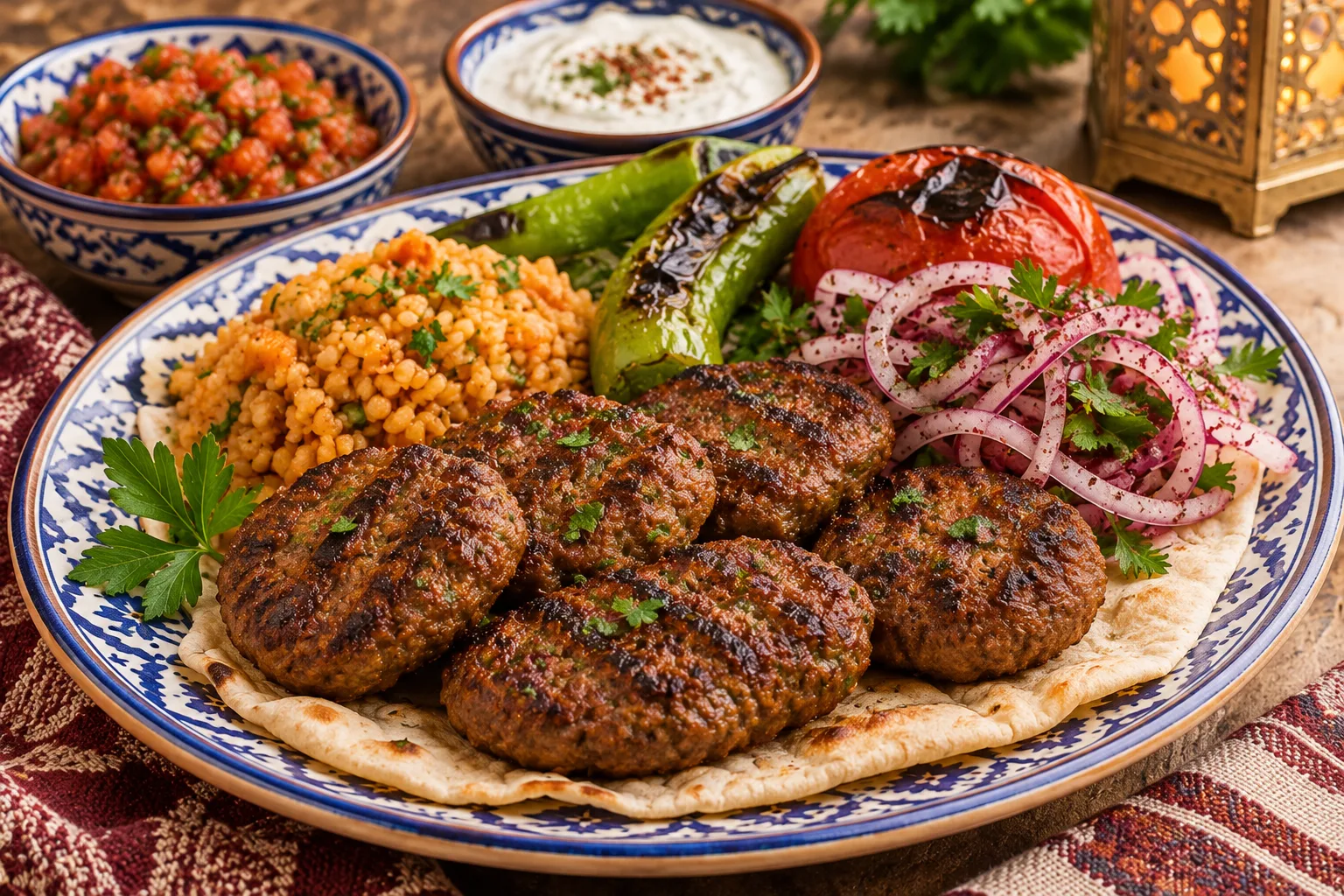
It's usually served over warm flatbread, which catches some of the juices, with grilled peppers, tomatoes and onion salad alongside.
Simple, but very satisfying.
Adana Kebab, Urfa Kebab and Moroccan Kefta: What's the Difference?
If you're familiar with Turkish food, you may have noticed that Adana kebab is often served alongside another variety called Urfa kebab.
Urfa takes its name from Şanlıurfa, another city in south-eastern Turkey.
The two kebabs look very similar. Both are made from minced meat shaped onto long, flat skewers, but the main difference is the seasoning.
Adana kebab is traditionally the spicier version, while Urfa kebab is usually milder.
In Turkish, you may hear the words acılı (spicy) and acısız (without chilli heat).
And what about our Moroccan kefta?
Here in Tetouan, we're already very familiar with the smell of kefta cooking over charcoal, particularly at local grills and restaurants.
Moroccan kefta often contains beef, sometimes mixed with lamb, and is usually seasoned with herbs, cumin, paprika and other spices.
The meat is commonly shaped into smaller kebabs on thinner skewers.
Here's a simple comparison:
| Adana kebab | Urfa kebab | Moroccan kefta | |
|---|---|---|---|
| Meat | Traditionally sheep meat | Usually lamb | Usually beef, sometimes lamb |
| Flavour | Spicy, with red pepper | Mildly seasoned | Aromatic, with herbs and spices |
| Shape | Long, flat skewer | Long, flat skewer | Smaller skewers |
| Cooking | Traditionally charcoal-grilled | Traditionally charcoal-grilled | Often charcoal-grilled |
| Served with | Flatbread, sumac onions and grilled vegetables | Flatbread, salads and grilled vegetables | Moroccan bread, salads and sauces |
All three are delicious, but they offer different flavours.
Moroccan kefta gets much of its character from the herbs and spices mixed into the meat. Adana is known for its red pepper seasoning, while Urfa is a lovely choice for anyone who prefers a milder kebab.
How to Make Turkish Urfa-Style Kebab at Home
If you enjoy Turkish kebabs but prefer something milder than Adana, Urfa kebab is a lovely one to try.
Named after Şanlıurfa in south-eastern Turkey, this kebab is traditionally made from minced meat shaped onto long, flat skewers.
It's similar in appearance to Adana but without the same level of chilli heat.
Here's a simple home version for four people.
Ingredients
-
600 g minced lamb, ideally with around 20% fat
-
1 teaspoon salt
-
½ teaspoon freshly ground black pepper
-
½ teaspoon sweet paprika (optional, for a home-style variation)
-
1 tablespoon finely chopped red pepper, with excess moisture removed (optional)
Method
-
Place the minced lamb in a bowl with the salt and seasonings.
-
Knead the mixture for about 5 minutes until it becomes slightly sticky.
-
Cover and refrigerate for at least an hour.
-
Divide into eight portions and press firmly onto wide, flat metal skewers. Alternatively, shape into elongated kebabs.
-
Grill over medium-hot charcoal or under a preheated oven grill, turning carefully until browned and cooked through.
-
Check that the centre reaches 71°C before serving.
Serve with warm flatbread, grilled tomatoes, green peppers and a fresh onion salad with sumac.
This is a simplified Urfa-style recipe for home cooking rather than an exact traditional regional recipe.
How to Make Traditional Moroccan Kefta Skewers
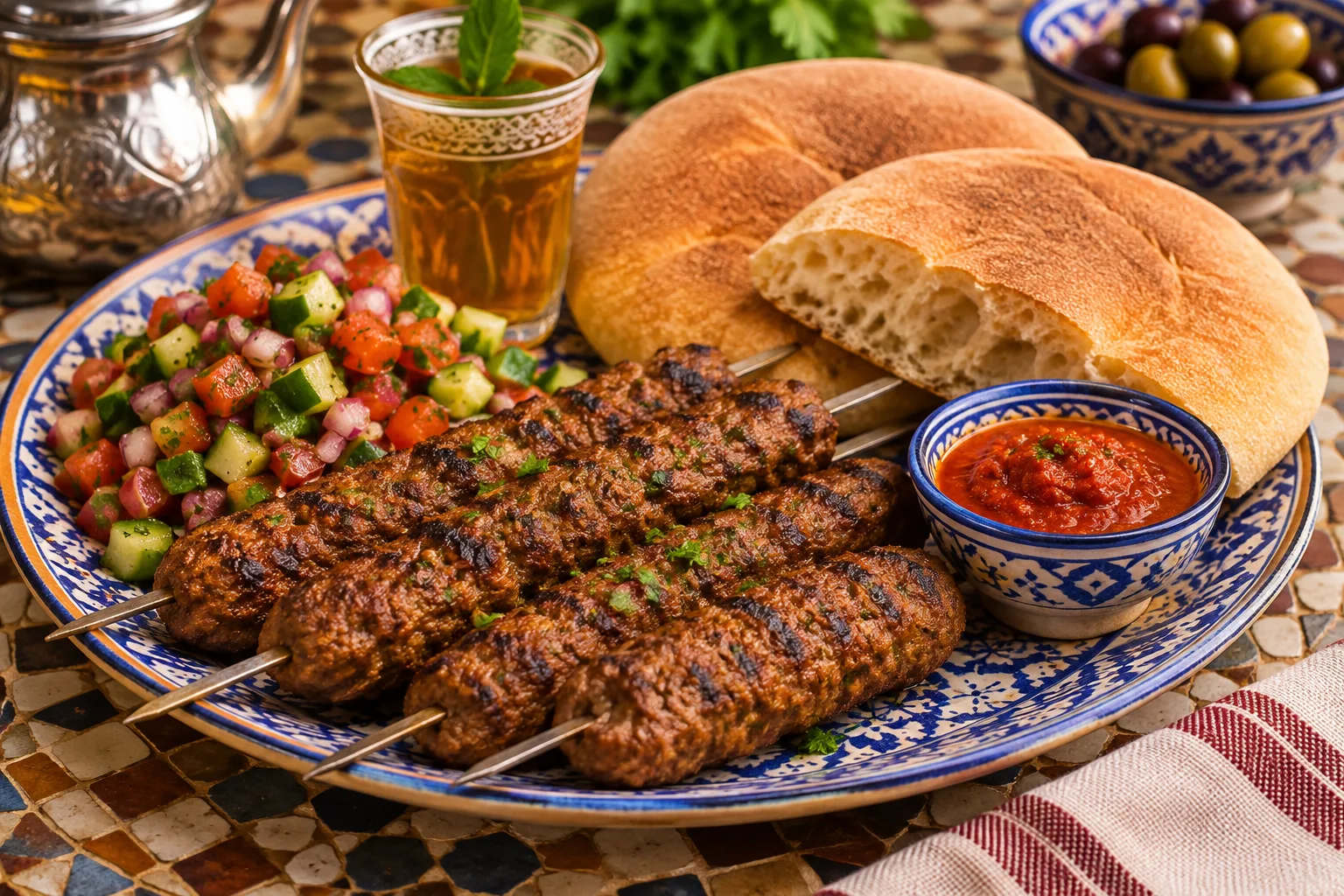
Here in Morocco, kefta is something most families are familiar with.
Whether it's cooked on a charcoal grill, served with bread and salad or prepared in a tagine with eggs, it's a favourite in many homes.
Unlike the simpler seasoning of Turkish Adana and Urfa kebabs, Moroccan kefta is usually full of fragrant herbs and spices.
And there's something particularly lovely about freshly grilled kefta served with Moroccan bread and a glass of atay.
Ingredients — Serves 4
-
600 g minced beef, or a mixture of beef and lamb
-
1 small onion, finely grated and squeezed to remove excess liquid
-
2 tablespoons finely chopped parsley
-
2 tablespoons finely chopped coriander
-
1 teaspoon ground cumin
-
1 teaspoon sweet paprika
-
½ teaspoon black pepper
-
1 teaspoon salt
-
A small pinch of chilli, if you like a little heat
Method
-
Place the minced meat in a large bowl.
-
Add the grated onion, parsley, coriander and spices.
-
Mix everything thoroughly by hand until the seasoning is evenly distributed.
-
Cover and refrigerate for around 30 minutes.
-
Divide the mixture into approximately 12 portions and shape each one around a skewer.
-
Cook over a charcoal grill, turning regularly, until nicely browned and cooked through. Alternatively, use a grill pan or oven grill.
-
Check that the centre reaches 71°C before serving.
Serve with fresh Moroccan khobz, a chopped tomato, cucumber and onion salad, olives and a little harissa if you enjoy spicy food.
And of course, a pot of Moroccan mint tea alongside it!
It's a simple, comforting meal and a lovely example of how Moroccan cooking brings so much flavour to everyday ingredients.
What Should You Serve with Adana Kebab?
One of the nicest things about Turkish food is the way different dishes are brought together on the table.
Adana kebab is lovely on its own, but I think the accompaniments make the meal even more enjoyable.
Turkish bread
Warm Turkish pide bread or lavash is perfect for sandwiching or wrapping around the kebab with a little onion salad.
Sumac onion salad
Thinly sliced onions, chopped parsley, sumac and lemon juice make a fresh, slightly tangy salad that goes particularly well with rich grilled meat.
Turkish ezme
Ezme is a finely chopped salad made with tomatoes, peppers and seasonings. Some versions also include pomegranate molasses.
Its fresh flavour is a lovely contrast to the meat.
Grilled vegetables
Tomatoes and green peppers are traditional accompaniments and work beautifully alongside the kebab.
A cold glass of ayran
If you've never tried ayran, it's a Turkish yoghurt drink made with yoghurt, water and salt.
It's wonderfully refreshing with grilled meat, particularly when the kebab has a little heat from the red pepper.
And if you enjoy rice with your kebab, Turkish pilaf is another lovely option.
Our Adana-Style Kebab Meal in Tetouan
At Samarkand Bakery, we enjoy introducing people in Tetouan to different foods from Turkish and Uzbek cooking.
Of course, we're a home-based bakery, not a Turkish restaurant with a large charcoal grill. So when we prepare our Adana-style kebab, we cook it in the oven rather than over charcoal. It's our home-kitchen interpretation of the dish, inspired by those wonderful Turkish flavours.
When we offer it as a weekend special, we serve it as a complete meal with:
-
100 g Adana-style kebab — seasoned minced meat with red pepper and herbs.
-
300 g Turkish pilaf — rice prepared with toasted orzo, or vermicelli when orzo isn't available.
-
Köpoğlu — a Turkish aubergine and pepper dish with tomato and garlic yoghurt.
-
Turkish onion salad — sliced onions with parsley and sumac.
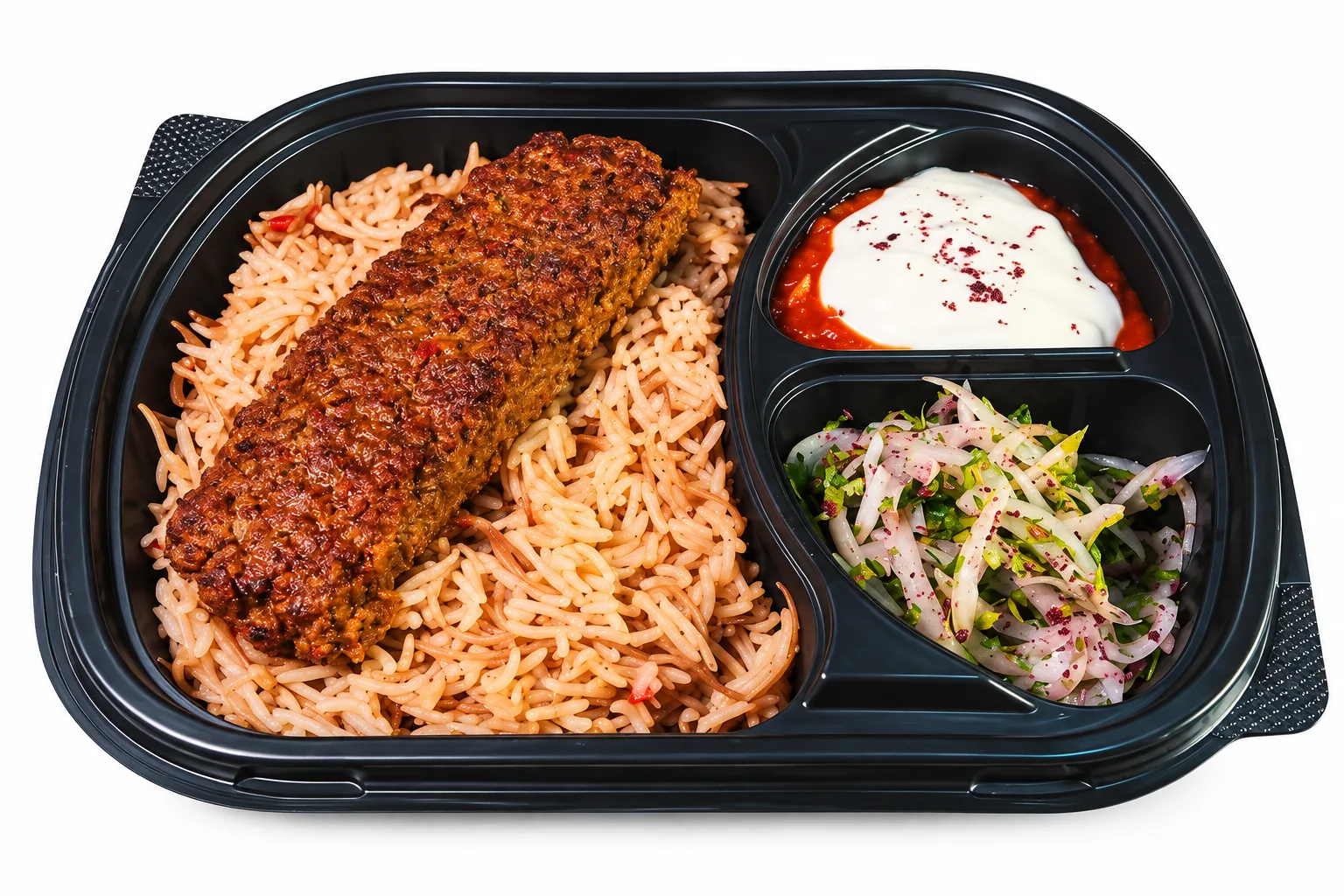
I particularly like the combination of the kebab with the rice and salads.
You have the rich, savoury meat, the comforting pilaf and the freshness of the vegetables all on one plate. It's a lovely way to try something different without having to prepare several separate dishes yourself.
Our Adana-style kebab meal is an occasional weekend special rather than a permanent menu item, so availability depends on what we're preparing that week.
PLEASE NOTE: When it's available, you'll be able to add it to your order, however if we are preparing something else that weekend, you won't be able to add it to your order even if it's listed on our Samarkand Bakery website.
Coming Soon: Turkish Köfte Kebab
And we have something else planned for our menu, insha Allah!
We're hoping to introduce Turkish köfte kebab at Samarkand Bakery soon.
Köfte is another much-loved Turkish minced-meat dish, with its own seasoning and preparation methods.
There are many regional varieties, from small grilled patties to elongated kebabs.
It's something I'm looking forward to offering our customers here in Tetouan.
I still need to finalise the pricing and add it to our website, so I can't give an exact date just yet.
Keep an eye on our weekend menu for updates!
Frequently Asked Questions
Is Adana kebab very spicy?
Traditional Adana kebab is known for its red pepper seasoning, but the level of heat can vary.
Some versions are quite spicy, while others have a gentler warmth.
If you prefer a milder Turkish kebab, Urfa is another variety worth trying.
Is Adana kebab the same as Moroccan kefta?
No, although they have some similarities.
Both are made from minced meat and can be grilled on skewers, but Adana kebab traditionally has a simpler red pepper seasoning, while Moroccan kefta often contains several herbs and spices.
What's the difference between Urfa kebab and Turkish köfte?
Urfa kebab is a particular style of minced-meat kebab from Şanlıurfa, traditionally shaped onto long, flat skewers and seasoned mildly.
Köfte is a much broader category of Turkish minced-meat dishes.
Depending on the region and recipe, köfte may be shaped into small patties, meatballs or elongated kebabs.
Can I order Adana kebab from Samarkand Bakery every weekend?
Not necessarily. Our Adana-style kebab meal is a limited weekend special.
We announce available dishes through our menu and customer updates, so it's best to check before ordering.
Will Samarkand Bakery be selling Turkish köfte kebab?
Yes, that's the plan, insha Allah!
We're working towards adding Turkish köfte kebab to our menu, although the price and launch date haven't been finalised yet.
A Little Taste of Turkey, Here in Tetouan
One of the things I love about food is discovering how different countries can take similar ingredients and create something completely their own.
We have our wonderful Moroccan kefta, Turkey has its Adana and Urfa kebabs, and across Central Asia you'll find many other variations of grilled and seasoned meat.
Each has its own traditions, flavours and way of being served.
That's part of what makes exploring different cuisines so enjoyable.
At Samarkand Bakery, we hope to introduce more of these traditional flavours to Tetouan, one dish at a time.
If you'd like to try our Adana-style kebab meal when it's available, you can visit samarkandbakery.com to see our weekend menu.
We prepare our food in our home kitchen in Tetouan, with collection from Wilaya Centre on Saturdays and Sundays, normally between 10 am and 6 pm.
For larger orders or questions about our weekend specials, you're always welcome to message us on WhatsApp.
We hope you'll enjoy discovering another little taste of Turkey with us, insha Allah.